
Xi Reaffirms Aim to Reunify Taiwan as Military Drills Surround the Island
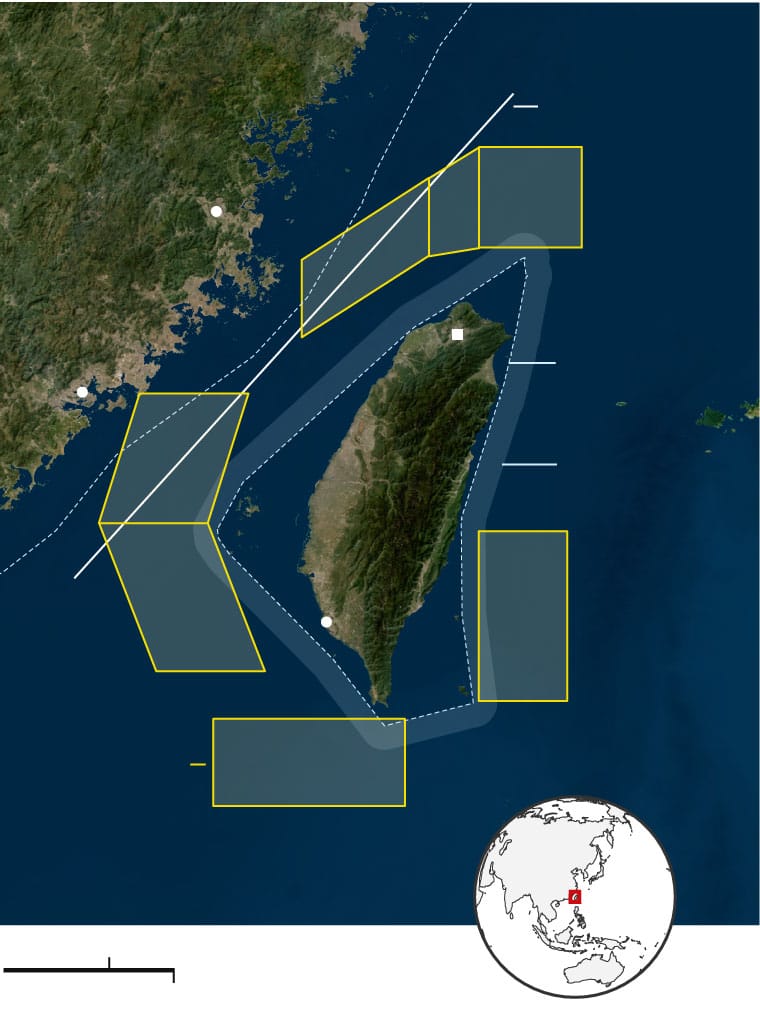
China’s president, Xi Jinping, used his New Year’s Eve address to reiterate Beijing’s goal of reunifying Taiwan, saying the move was "a trend of the times" and "unstoppable." The remarks came immediately after a period of large-scale Chinese military exercises around the self-governing island.
The drills, conducted by the People’s Liberation Army and labelled "Justice Mission 2025," involved live-fire exercises and operations intended to simulate a blockade of Taiwan’s main ports. Over two days, the exercises brought together elements of China’s navy, air force, rocket force and coastguard to encircle Taiwan’s main island.
Officials in Taiwan reported that at least 200 warplanes took part across the two days, the highest tally in more than a year, and that 27 missiles were fired toward the island, with several landing within 27 nautical miles of Taiwan’s coastline. By the time the drills concluded, Taiwan remained on high alert as 25 Chinese navy and coastguard vessels remained in the vicinity and two surveillance balloons were dispatched, one of which flew across Taiwan’s northern coastline.
Analysts had expected such exercises before the end of the year, and some commentary in China connected the drills to a recent US approval of arms sales to Taiwan, valued at a record $11bn. Several governments publicly criticised the drills, including the UK, Japan, Australia, the Philippines, the EU and the US.
China’s foreign ministry said it had lodged "serious protests" over those nations’ remarks and accused them, incorrectly, of domestic policies that recognised Taiwan as part of China. The ministry’s spokesman, Lin Jian, said the "biggest threat to peace and stability in the Taiwan Strait is ‘Taiwan independence’ forces’ separatist activities and external connivance and support for these activities."
Xi’s televised address highlighted broader themes of national rejuvenation and international engagement. He pointed to Beijing’s hosting of multilateral meetings, including the Shanghai Cooperation Summit in August, and the country’s cultural and technological achievements during the year. State media interspersed the speech with footage from China’s largest-ever military parade, held in September to mark the 80th anniversary of the end of the second world war.
During that parade, Xi appeared alongside the leaders of Russia and North Korea, an alignment that has been described by some commentators as an "axis of upheaval." The parade was presented in state broadcasts as a demonstration of military capability.
Central to Xi’s stated vision is bringing Taiwan under Beijing’s "One China" framework and securing international recognition of that position. The majority of people in Taiwan, however, reject being governed by the Chinese Communist Party in Beijing, and Taiwan’s leadership has continued to emphasise the island’s democratic sovereignty.
Taiwan’s president, Lai Ching-te, responded with his own New Year’s address, warning of China’s "rising expansionary ambitions" and vowing to "staunchly defend national sovereignty." Lai urged opposition parties — which control Taiwan’s parliament — to stop blocking a special bill intended to increase the island’s defence budget. "Facing China’s alarming military ambitions, Taiwan has no time to wait and certainly no time to consume ourselves with internal strife," Lai said.
Xi also referenced historical themes in his remarks, mentioning "Taiwan Retrocession Day," a memorial date established in 2025 to mark the end of Japanese imperial rule in Taiwan in 1945. Taiwan this year passed a law recognising 25 October as a national holiday. The legacy of the second world war has figured prominently in political rhetoric on both sides this year, including speeches that compared Taiwan’s security situation to historical European threats.
In addition to defence and historical themes, Xi highlighted domestic achievements in technology and culture. He mentioned developments such as kickboxing robots and China’s Tianwen-2 comet exploration mission, and cited the international success of cultural exports including the video game Black Myth: Wukong and the animated film Ne Zha 2. Earlier on the same day as the address, Xi told a meeting of top Communist Party officials that China was on track to meet its 5% GDP growth target.
The exchange of rhetoric and the recent military activity underscore continuing tensions across the Taiwan Strait. Beijing’s emphasis on reunification and demonstrations of military capability have been met with concern from Taipei and criticism from a number of regional and Western governments. Taiwan’s leadership has signalled a focus on strengthening defence and national unity in response.
Key Topics
Xi Jinping New Year Address, Reunification Of Taiwan, Justice Mission 2025 Exercises, People's Liberation Army Drills, Taiwan Strait Tensions, Us Arms Sales To Taiwan, Global Criticism Of Chinese Drills, One China Policy, Lai Ching-te Response, Taiwan Defence Budget, Military Parade 80th Anniversary, China‑russia‑north Korea Alignment, Tianwen-2 Comet Mission, Taiwanese Sovereignty