
Years After Coup, Myanmar’s National Unity Government Faces Marginalization
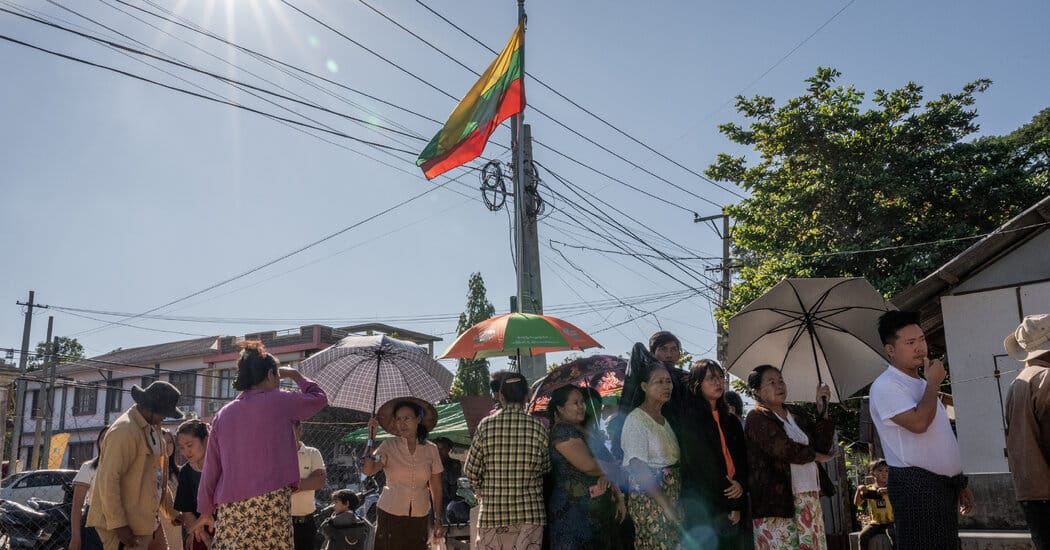
Five years after the military overthrew the elected government on Feb. 1, 2021, the National Unity Government of Myanmar — a pro-democracy shadow government formed by politicians and civic leaders in exile — has failed to halt the junta’s consolidation of power and, critics say, is becoming increasingly irrelevant as the military prepares to present what it calls a civilian government after a staged election concluded last Sunday.
The N.U.G. set up offices in Washington, London and in some restive parts of Myanmar, raised tens of millions of dollars, pledged to field an army of ethnic and rebel groups, and created ministries, but it has achieved few major successes. It has failed to reverse international apathy toward the military’s brutal crackdown, which has left at least 7,700 dead since the coup, and it does not have full control of local rebel groups on the battlefield.
The military, which remains ensconced in cities and controls about half the nation’s territory, held elections in three phases only in areas under its control. The N.U.G. called for a boycott; the vote was widely derided as a sham and is expected to produce a political party that is a proxy for the junta.
The military reported voter turnout at 54.1 percent, its lowest in decades, while the N.U.G. said turnout in urban centers like Yangon and Mandalay was likely closer to 20 percent. Many opposition politicians remain jailed, barred from politics or in hiding.
national unity government, n.u.g. funding transparency, myanmar staged election, min aung hlaing, people's defense forces, junta consolidating power, voter turnout yangon mandalay, duwa lashi la, mahnn win khaing than, daw zin mar aung, military-controlled elections, ethnic rebel groups funding