
430,000-Year-Old Wooden Tools and 500,000-Year-Old Bone Hammer Found in Europe
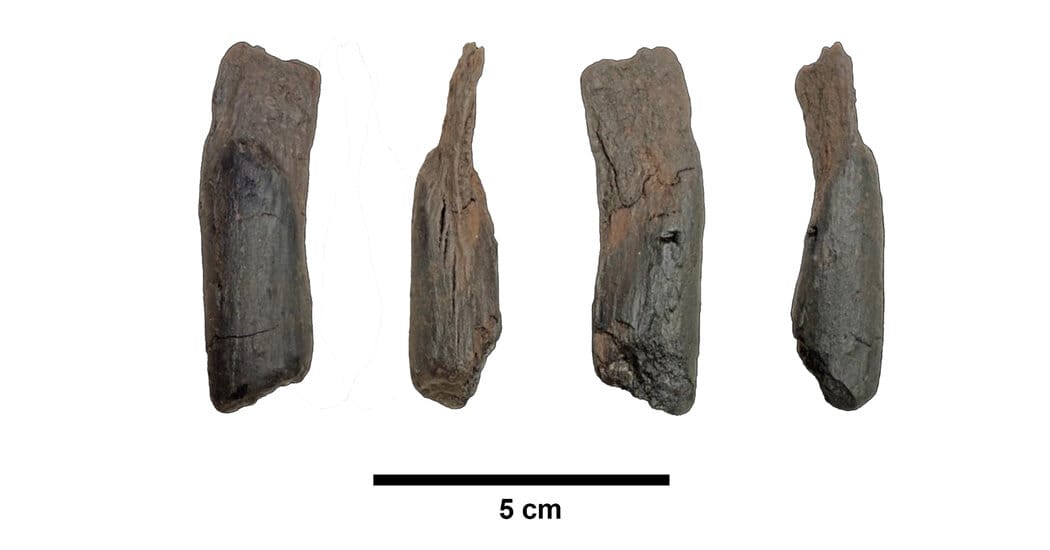
Two new studies report very early toolmaking in Europe: small wooden tools dated to about 430,000 years ago were recovered from a lakeshore mine in southern Greece, and a roughly 500,000-year-old hammer made of elephant or mammoth bone was identified from a site in southern England.
The Greek finds come from the Marathousa 1 site in the Megalopolis basin and include a worked alder shard described as a digging stick and a carved poplar or willow twig. "We found marks from chopping and carving on both objects, clear signs that humans had shaped them," said Annemieke Milks, a lead author who conducted microscopic analysis and CT scans.
The wood fragments were embedded with animal remains, including a straight-tusked elephant, and date to the Middle Pleistocene, roughly 478,000 to 424,000 years ago. Katerina Harvati, a lead author on the wooden-tools paper, said the discoveries provided insight into the prehistoric origins of human intelligence, researchers said.
The bone hammer was recovered decades ago at the Boxgrove site in West Sussex and only recently identified as a tool. Silvia Bello, an author of the bone study, said the four-inch triangular fragment bears notches and repeated strikes and contains small pieces of flint embedded in the bone, evidence the object "was used for this specialized purpose" of knapping stone to make tools.
Key Topics
Science, Wooden Tools, Bone Hammer, Megalopolis Basin, Boxgrove, West Sussex