
67,800-year-old handprint in Indonesian cave may be oldest rock art
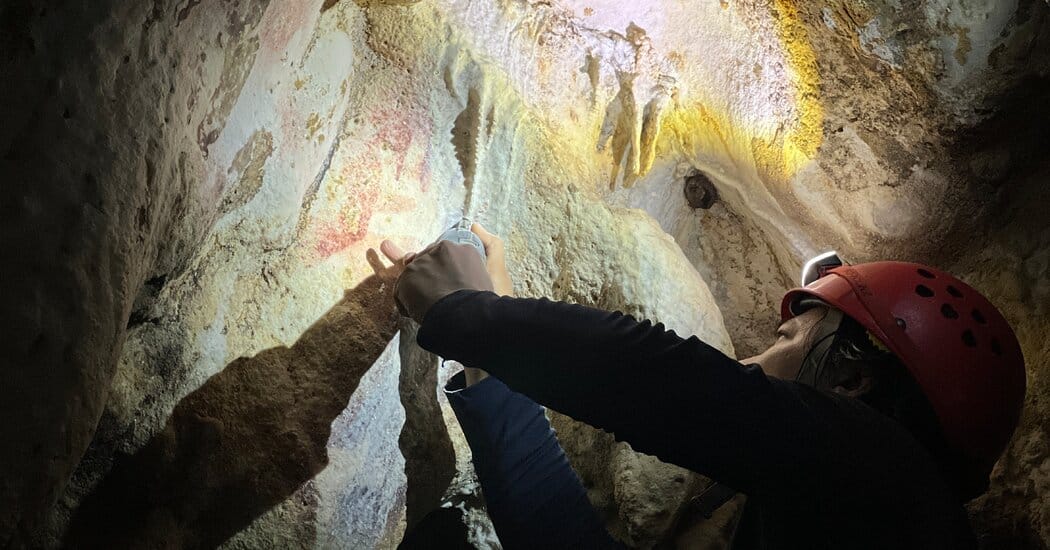
Researchers say a faint handprint in the Liang Metanduno cave on the island of Muna, in Southeast Sulawesi, Indonesia, may be the oldest known rock art, created at least 67,800 years ago, according to a study by Australian and Indonesian experts published in Nature. The mark was identified in 2015 by Adhi Agus Oktaviana beneath an earlier, better-known painting and at first looked like a natural color change in the rock.
Co-author Adam Brumm of Griffith University said, "It was hiding in plain sight all this time." The team used uranium-series dating of calcium carbonate deposits that formed on and over the artwork to establish the minimum age. The image shows a hand stencil with paint around it; the fingers appear elongated and sharpened into a claw-like form, a feature the researchers say is commonly seen in Sulawesi cave art.
Mr. Brumm described the effect as, almost, "Nosferatu's claw-like hand." Some specialists urged caution: Paul Bahn wrote in an email that the minimum age "does not make this motif necessarily older than ones they have previously dated" and called media claims of the "oldest" art "nonsense." The authors conclude the handprint was most likely made by Homo sapiens, citing the work's technical and stylistic complexity and its fit with known arrival times for our species in the region, but they did not rule out other human groups.
Key Topics
Science, Liang Metanduno Cave, Muna Island, Southeast Sulawesi, Adhi Agus Oktaviana, Adam Brumm