
After Court Ruling, What Happens to Trump’s Trade Deals?
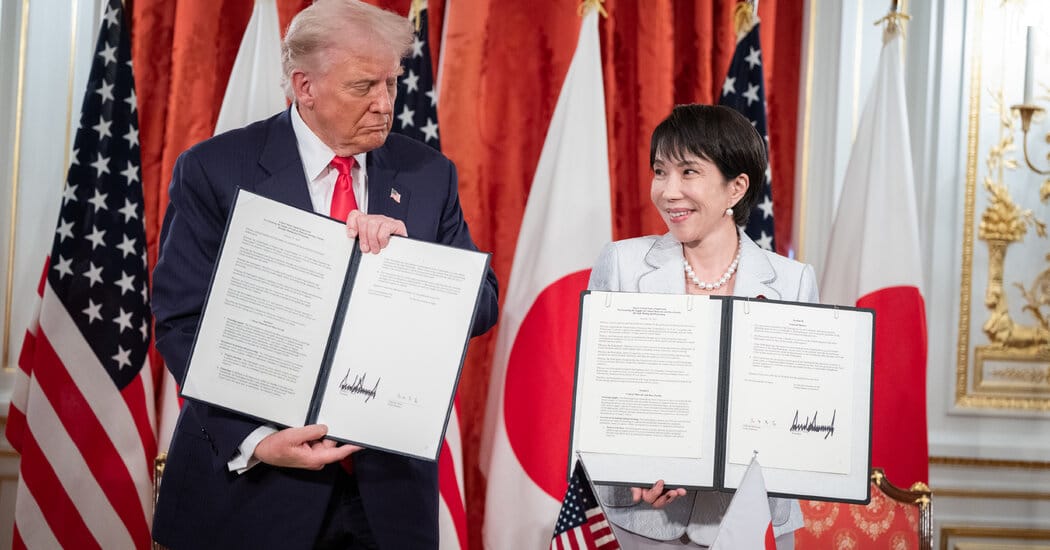
The Supreme Court’s decision to invalidate many of President Trump’s tariffs cast doubt over a string of recent trade deals. Many agreements had set tariffs at roughly 15 to 20 percent, cutting what would have been steeper duties in return for trade concessions and promises of investment.
Mr. Trump said some pacts would stand but offered few details, and he announced a separate 10 percent global tariff under an authority aimed at balancing trade deficits. China has been the principal target of the administration’s tariffs, and the court ruling peels back some layers of the tariff stack — including a 10 percent general duty and a 10 percent levy tied to fentanyl flows.
Other levies persist, such as 100 percent tariffs on Chinese electric vehicles and 50 percent or higher duties on many steel and aluminum products. Those duties contributed to a roughly one-fifth drop in Chinese exports to the United States last year and helped push Chinese firms to shift final assembly to Southeast Asia, Latin America and Africa.
United States
supreme court, tariffs, trade deals, trump, global tariff, china, fentanyl levy, electric vehicles, steel tariffs, chinese exports