
Algae blooms on Greenland’s ice are darkening surfaces and speeding melt, studies say
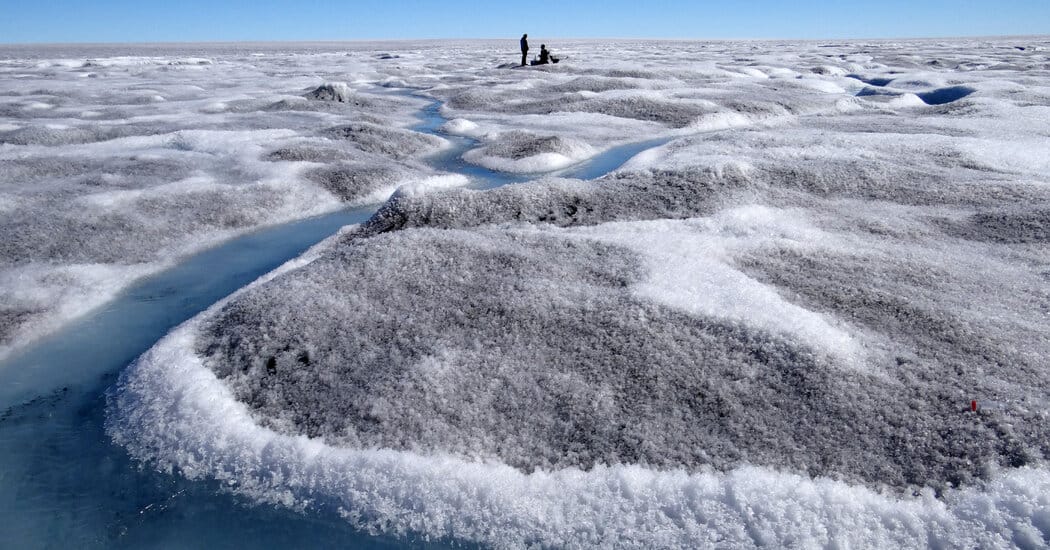
Two new studies published in January find that algae growing on Greenland’s snow and ice is darkening surfaces and exacerbating seasonal melting, the research says. One paper appeared Jan. 13 in Environmental Science and Technology and the other on Jan. 28 in Nature Communications.
On snow the growth appears green or red and on ice it looks brownish gray; these dark patches reduce the ice’s ability to reflect sunlight and so speed melting. Wind carries phosphorus-laden dust from exposed rocky ground onto the ice, feeding algae blooms, and other nutrients trapped in layers of ice and snow are released as the landscape thaws.
Jenine McCutcheon, an assistant professor at the University of Waterloo and lead author of the Environmental Science and Technology paper, found algae accounted for about 13 percent of melt runoff in southwest Greenland and concluded that dust likely comes from a relatively narrow band of exposed ground blown inland.
The study also found microscopic traces of algae in the air, offering clues to how blooms colonize new patches; Utah State University biologist Scott Hotaling, not affiliated with the papers, called that combination of dust and algae data "fascinating." The Nature Communications study, led by Beatriz Olivas at Aarhus University, reported that phosphorus and nitrogen have been embedded in successive layers of ice and snow and are liberated during summer melt, with even very small nutrient amounts able to sustain algal growth.
greenland ice algae, algae blooms greenland, ice darkening algae, windblown phosphorus dust, nutrients liberated during melt, 13 percent melt runoff, jenine mccutcheon, beatriz olivas, nature communications, environmental science and technology, microscopic airborne algae, liane benning