
Andean artist Antonio Paucar wins Artes Mundi prize and will fund mountain cultural centre
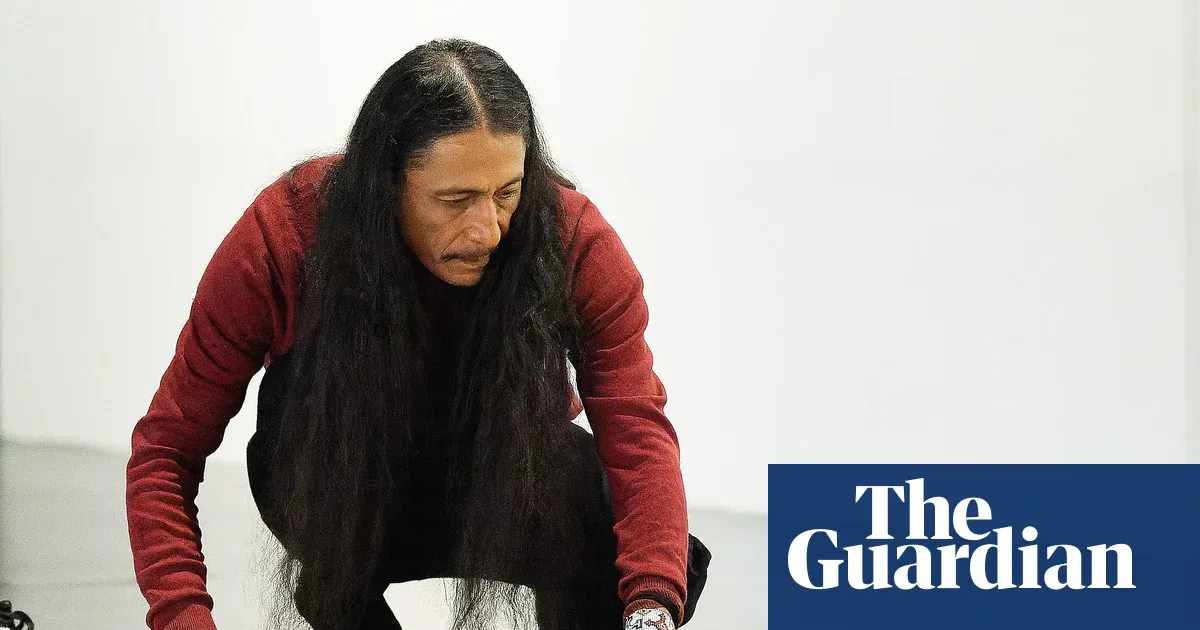
Antonio Paucar, an artist and beekeeper from the Peruvian Andes, has won the Artes Mundi prize in Wales and plans to spend the £40,000 award on building a cultural centre in the Peruvian mountains. The biennial prize, based in Wales, aims to highlight talented but largely unrecognised artists from around the world.
Paucar was declared the winner after presenting work ranging from a spiral made of alpaca wool, La Energía Espiral del Ayni, to a video, El Corazón de la Montaña, of him writing a poem in his own blood about the environmental crisis facing his region. He is from the village of Aza, near Huancayo in Peru’s Junín region, where his family make traditional figures and masks; he worked as a beekeeper before travelling to Berlin to study art and now splits his time between making art that highlights environmental issues, helping to preserve his culture and language, and looking after bees.
On Ayni he said: "Ayni is a Quechua word. It represents an Andean concept, a way of thinking, the idea that everything is linked. It has allowed people in the Andes to maintain a balance with nature." Not all of Paucar’s work has been universally well received. The Guardian’s art writer Jonathan Jones criticised a video shown at Mostyn of Paucar burying and burning a reproduction of Marcel Duchamp’s 1913 Bicycle Wheel; Paucar said he respected Duchamp and that the piece was a reference to a wheel he had played with as a child.
Key Topics
Culture, Antonio Paucar, Artes Mundi, Peru, Junin Region, Quechua