
Camilo José Vergara’s Bronx photograph captures 1970s urban decay
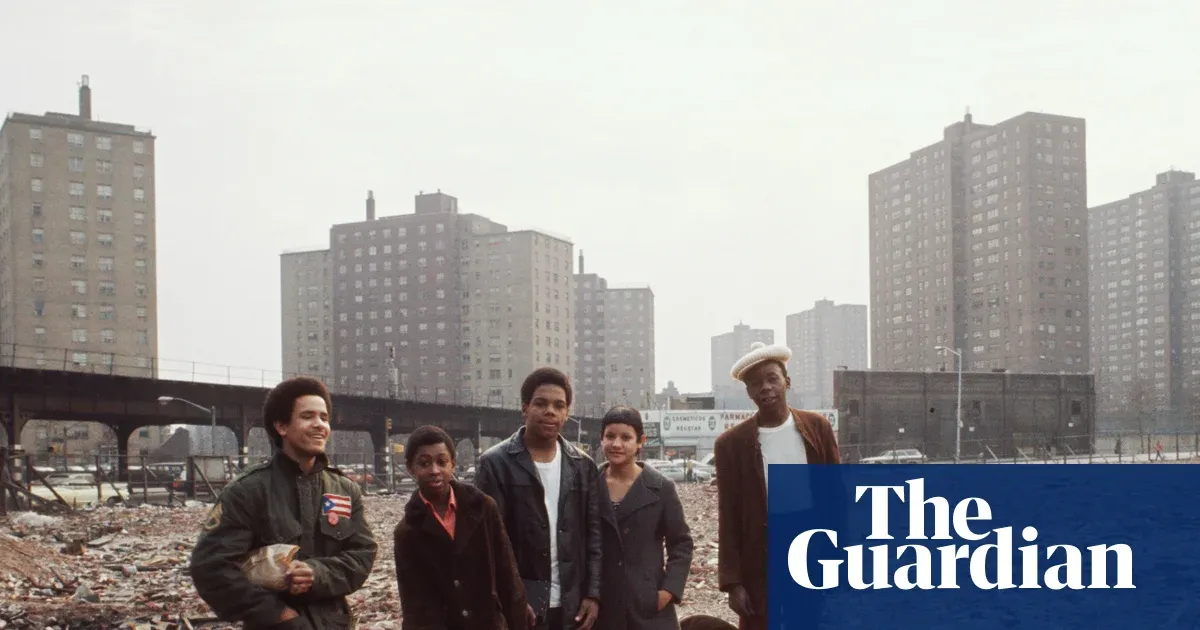
Camilo José Vergara said that in 1970 he was walking around the Bronx when he came across a group of kids and their dogs and made a photograph of them standing before the looming towers of housing projects, a huge vacant lot that he said later became a juvenile prison, and a subway line in the background.
Vergara, who arrived in the United States from Chile in 1965 and studied at the University of Notre Dame and Columbia, said a teacher encouraged him to try photography and lent him money for a Pentax Spotmatic. He described New York in that era as sharply divided — "half was white and the other half was Black and Latino" — and said deindustrialisation in the late 1960s and early 1970s was producing widespread job losses, store closures and disappearing neighbourhoods.
He told how walking the city could be dangerous, with "people high on heroin on the street" and a sense of desperation, but that those risks heightened his attention. Vergara said his aim was to capture the whole urban reality — from skyline to small details — as places disappeared, and that the Bronx picture combined the impersonal urban setting with a strong sense of each person's individuality.
Vergara's New York 1970s series is published by Café Royal Books. His CV in the source notes he was born in Santiago, Chile, in 1944, and lists being named a MacArthur Fellow in 2002 and receiving a National Humanities Medal from President Barack Obama in 2012; his "top tip" is: "Be empathic and inquisitive.
Key Topics
Culture, Camilo José Vergara, Bronx, New York, Pentax Spotmatic, Columbia University