
Captured Myanmar complex revealed as Chinese-run cyberscam hub
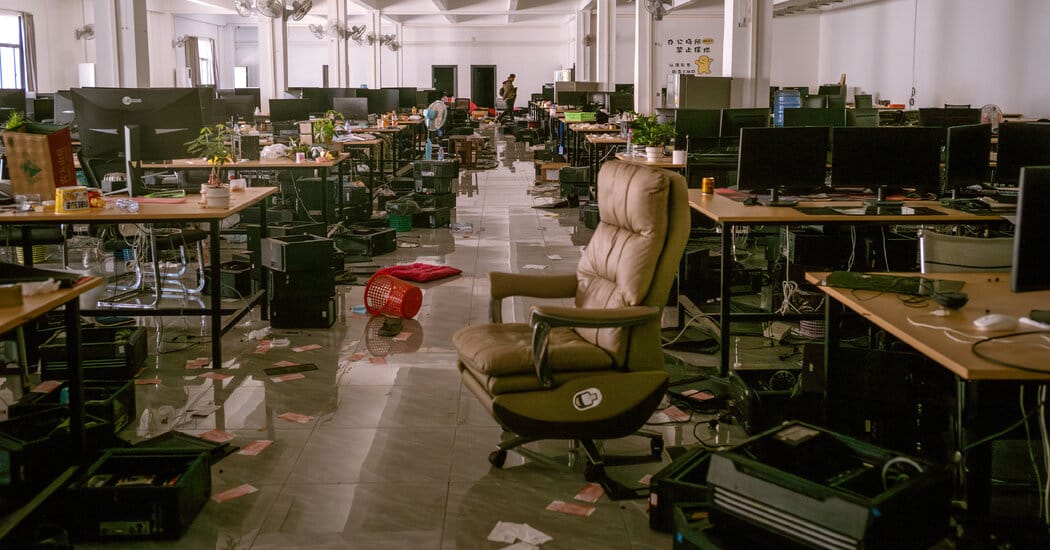
The New York Times gained rare access to Shunda Park, an office complex in war-torn Myanmar that a rebel militia captured and that, the paper found, was built for the purpose of stealing money from people around the world. Inside the site were thousands of pages of materials showing that more than 3,500 fraudsters from dozens of countries worked there, some reportedly trafficked into the business.
The operation used deepfakes, doctored videos, dedicated video-call rooms with fake backdrops, actors in wigs and finely tuned conversational ploys. Lower-level workers sent out thousands of initial messages on Facebook and other social media while others role-played romantic partners or impersonated crypto investors.
Notebooks and manuals recovered at Shunda detailed elaborate fake personas, down to invented childhood stories and personal tastes, and gave precise instructions that varied by nationality and age. The playbooks set multi-day timelines—basic questions in days one to three, made-up childhood stories in days three to five, romance by days five to seven—then introduced investment schemes.
Scammers were coached to explain large withdrawals to bank tellers as wedding costs and were told to press victims to add money until their savings and loans were exhausted. Some victims were directed to a platform called Renaissance Technologies AI Supercomputing Hedge Capital Ltd., or RTAI, which promoted websites and apps claiming high-level credentials and New York offices.
Key Topics
World, Shunda Park, Myanmar, Rtai, Deepfakes, Online Fraud