
Cloud-9 identified as a starless hydrogen cloud 14 million light‑years away
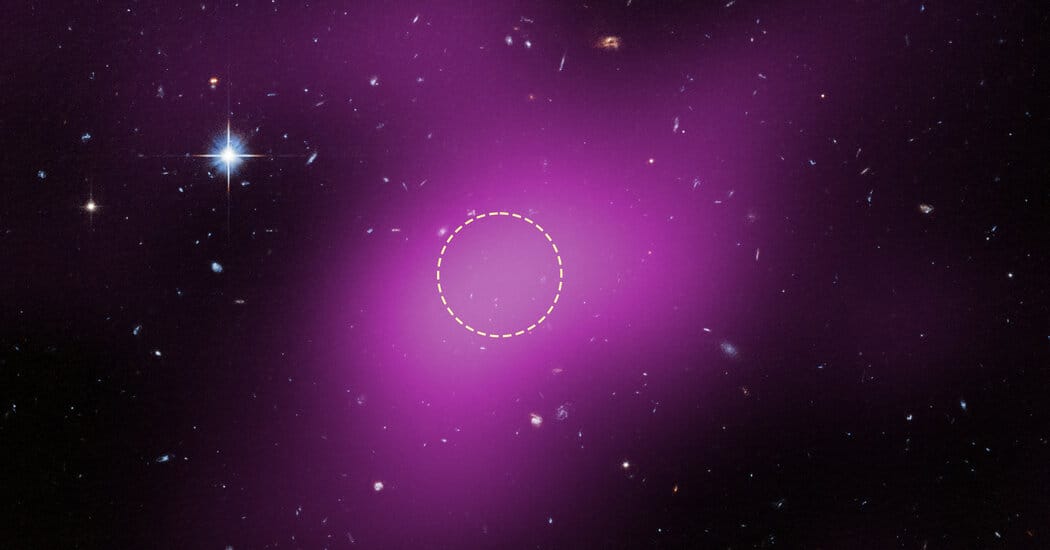
Astronomers announced the discovery of Cloud-9, a starless cloud of hydrogen about 14 million light‑years from Earth that they say is the first confirmed example of a Reionization-Limited H I Cloud (RELHIC). Cloud-9 was the ninth hydrogen cloud found near a nearby spiral galaxy and contains no detectable stars; researchers say it is a haze of hydrogen gas likely swaddled in a much more massive clump of dark matter.
Rachael Beaton of the Space Telescope Science Institute described it at a meeting of the American Astronomical Society as “basically a galaxy that wasn't” and added, “there's nothing like this that we've found so far in the universe.” Astronomers first reported Cloud-9 as potentially starless in 2023 using China's Five-hundred-meter Aperture Spherical Telescope; follow-up radio observations with the Green Bank Telescope and the Very Large Array strengthened that view.
In 2025, Hubble observations led by Gagandeep Anand indicated the dark matter halo is about five billion times the mass of the sun and surrounds roughly a million solar masses of hydrogen gas; Anand said, "It's clear that there is no substantial amount of stars here," and called it, "not a faint dwarf galaxy." The object aligns with theoretical expectations that lighter dark matter halos can gather gas without forming stars, so astronomers detect RELHICs via radio emission from hydrogen rather than starlight.
Key Topics
Science, Relhic, Dark Matter, Hydrogen Gas, Hubble Space Telescope, Very Large Array