
Cuttlefish use polarized-light skin patterns, invisible to humans, in courtship
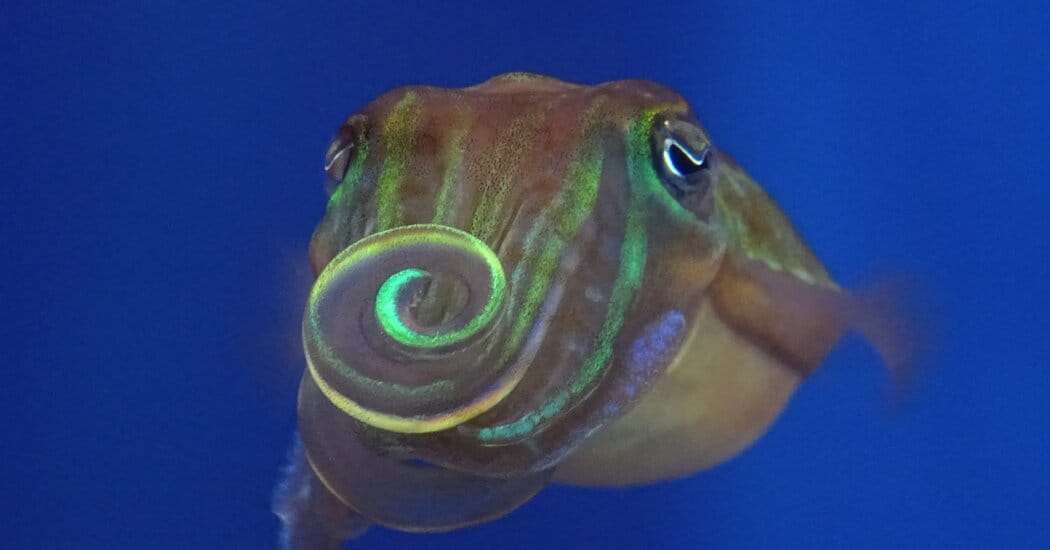
A study published on Monday in the Proceedings of the National Academy of Sciences reports that male cuttlefish produce a polarized-light pattern on their extended arms during courtship that is invisible to human eyes but was recorded by a camera with a polarized sensor. The observation was made by Arata Nakayama while watching cuttlefish in a tank in the basement of the Asamushi Aquarium.
Humans cannot distinguish the orientation of light waves, known as polarization, though many animals can, and scientists have known for 30 years that cuttlefish can both see polarization and reflect polarized light. Male cuttlefish unfurl extra-long arms in mating displays; Nakayama said he spent more than a month observing before capturing a clear image showing a hidden pattern of vertically and horizontally polarized light, while the naked eye saw only dark and light stripes.
Tissue examinations helped explain the effect: during the display a male shrinks pigment cells to expose reflective cells that polarize light horizontally, and from the vantage of a female positioned a few inches beneath the male some of that light passes through transparent arm muscles and rotates to vertical.
Because the polarization pattern appears only in flirtatious males, the study’s authors say it could be an eye-catching mating signal and that the use of polarized light in courtship may be more prevalent than previously thought.
Key Topics
Science, Cuttlefish, Asamushi Aquarium, Arata Nakayama, Pnas, Polarized Light