
Davos shifts from globalist virtue signaling to a business-first gathering
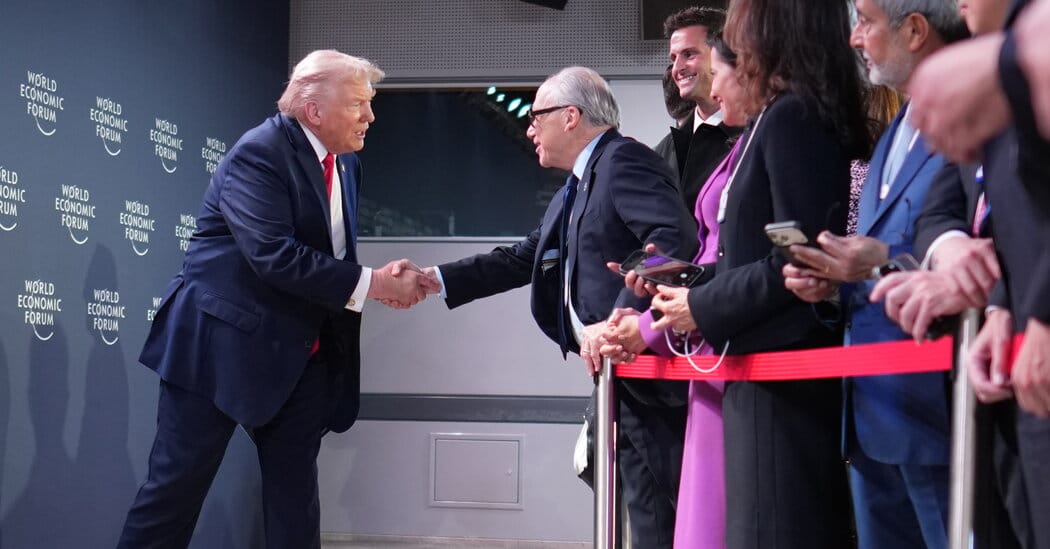
At the World Economic Forum in Davos, Katrin Bennhold spoke with her colleague Peter Goodman, a longtime attendee, who said the meeting’s pretense of being gathered “to improve the state of the world” has largely disappeared and that the event now reads more like a business conference.
Goodman traced Davos’s origins to 1971, when Klaus Schwab convened politicians, academics and business figures under the motto “Committed to improving the state of the world.” He described how the conference has changed physically—pop-up storefronts for big tech, consultancies and crypto have displaced smaller shops—and how its ethos has shifted as well.
He said Larry Fink of BlackRock, “who took over from Klaus Schwab,” is leaning into a purer business focus, with former buzzwords such as social justice and sustainability largely gone. Goodman added that organizers have “sanitized virtually every part of it to make the Trump administration feel welcome,” and that any remaining virtue signaling now appears aimed at Trump.
Goodman also noted the tension facing corporate leaders: they say they prefer long-term norms like central bank independence, but as C.E.O.s answer to shareholders and quarterly results, short-term business priorities dominate. According to him, the old Davos pretense is “more or less gone.”
Key Topics
Business, World Economic Forum, Davos, Larry Fink, Blackrock, Klaus Schwab