
Doomsday Clock set to 85 seconds to midnight, closest yet
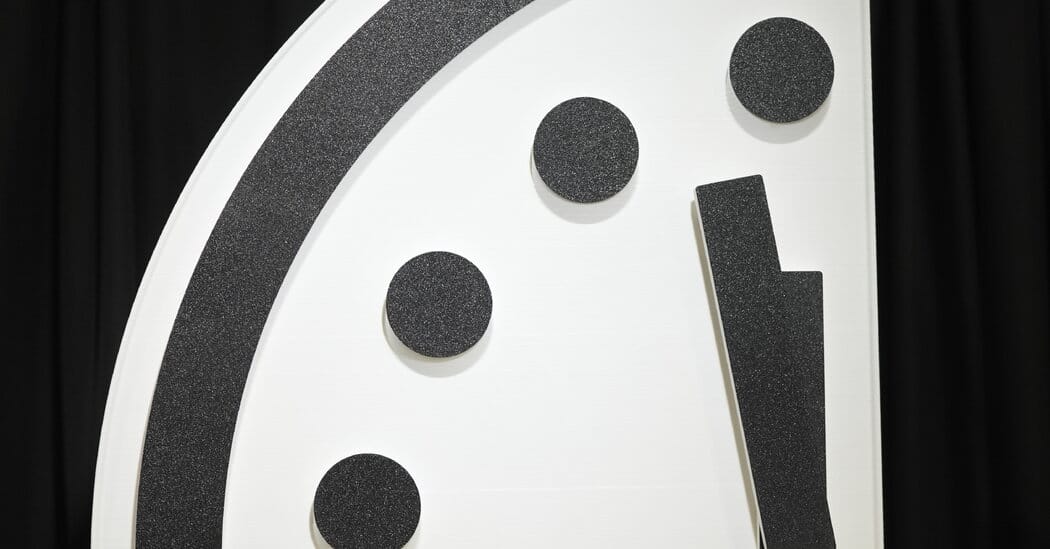
On Jan. 28, 2026, the Bulletin of the Atomic Scientists moved its Doomsday Clock to 85 seconds to midnight — the closest setting in the clock’s history — and displayed the clock during a news conference at the Carnegie Endowment for International Peace in Washington. The Bulletin’s experts said wars, climate change, disruptive technologies and the rise of autocracy over the past year prompted the change, and they advanced the clock four seconds from last year.
“Catastrophic risks are on the rise, cooperation is on the decline, and we are running out of time,” Alexandra Bell, the Bulletin’s president and chief executive, said. Antinuclear activists and survivors’ groups were among those paying attention. Hideo Asano, coordinator of the Japan Campaign to Abolish Nuclear Weapons in Tokyo, said in an interview, “This is a warning that we need to take urgent action to avoid global catastrophe,” and warned that the risk of nuclear war is the highest since the end of the Cold War.
Critics, the Bulletin noted, have called the clock a stunt based on subjective assessments and warned its repeated alarms could be dismissed by the public. The clock was created in 1947 when the nuclear arms race between the United States and the Soviet Union was the primary concern; the people involved included Albert Einstein and scientists such as J.
Robert Oppenheimer.
doomsday clock, 85 seconds to midnight, doomsday clock 2026, bulletin of the atomic scientists, alexandra bell, carnegie endowment for international peace, hideo asano, japan campaign to abolish nuclear weapons, antinuclear activists, nuclear war risk, nuclear arms race, russia-ukraine war, india-pakistan conflict, north korea nuclear tests, china nuclear stockpile, united states missile defense, golden dome space interceptors, climate change impacts, disruptive technologies, artificial intelligence risks, rise of autocracy, mirror life synthesis, public health infrastructure cuts, attacks on iranian nuclear sites, arms control treaty expiry, albert einstein, j. robert oppenheimer