
Wind-tunnel tests validate Dragonfly rotor design ahead of Titan mission
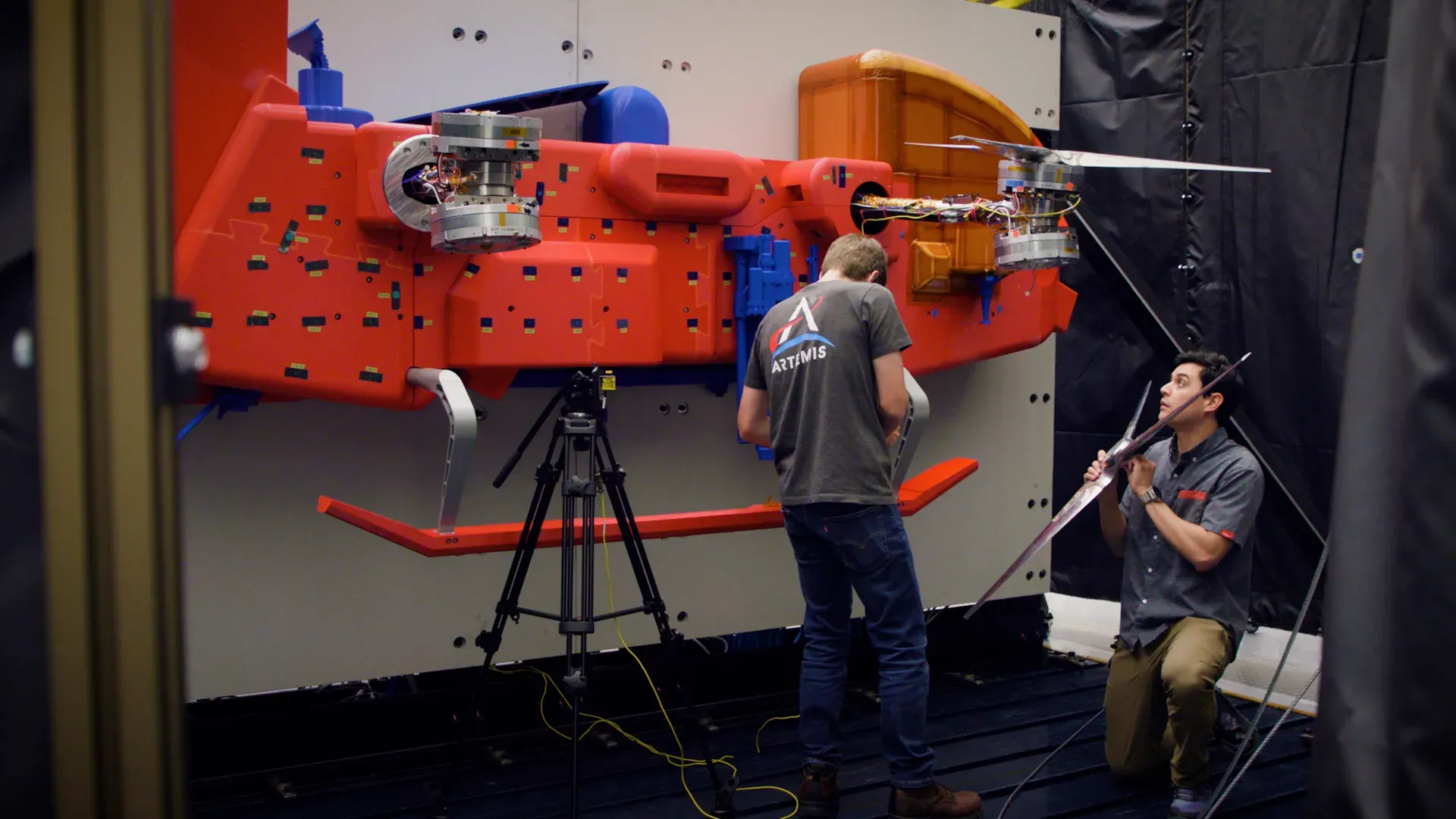
NASA’s Dragonfly rotorcraft, being designed and built at the Johns Hopkins Applied Physics Laboratory in Laurel, Maryland, has completed rotor and aerodynamic testing at the Transonic Dynamics Tunnel at NASA’s Langley Research Center in Hampton, Virginia. Set for launch in 2028 and due to arrive at Titan in 2034, the car-sized rotorcraft will exploit Titan’s dense atmosphere and low gravity to fly to dozens of locations, exploring environments from organic equatorial dunes to an impact crater where liquid water and complex organic materials may once have existed together.
Over five weeks from August into September the team evaluated the rotor system in Titan-like conditions, checking aeromechanical factors such as stress on rotor arms and vibration effects; smaller-scale tests wrapped up in late December. "When Dragonfly enters the atmosphere at Titan and parachutes deploy after the heat shield does its job, the rotors are going to have to work perfectly the first time," said Dave Piatak of NASA Langley.
APL machinist Cory Pennington cut the first rotors on Nov. 1, 2024, and engineers spin-tested them on a full-scale model representing half the lander before transport to the TDT. "On Titan, we’ll control the speeds of Dragonfly’s different rotors to induce forward flight, climbs, descents and turns," said Felipe Ruiz, lead rotor engineer at APL, and APL test lead Rick Heisler said the tests validated the design and produced data for high-fidelity performance models.
Key Topics
Science, Dragonfly, Titan, Johns Hopkins Apl, Nasa Langley, Transonic Dynamics Tunnel