
Endangered guthega skink Omeo due to give birth after release in Victoria
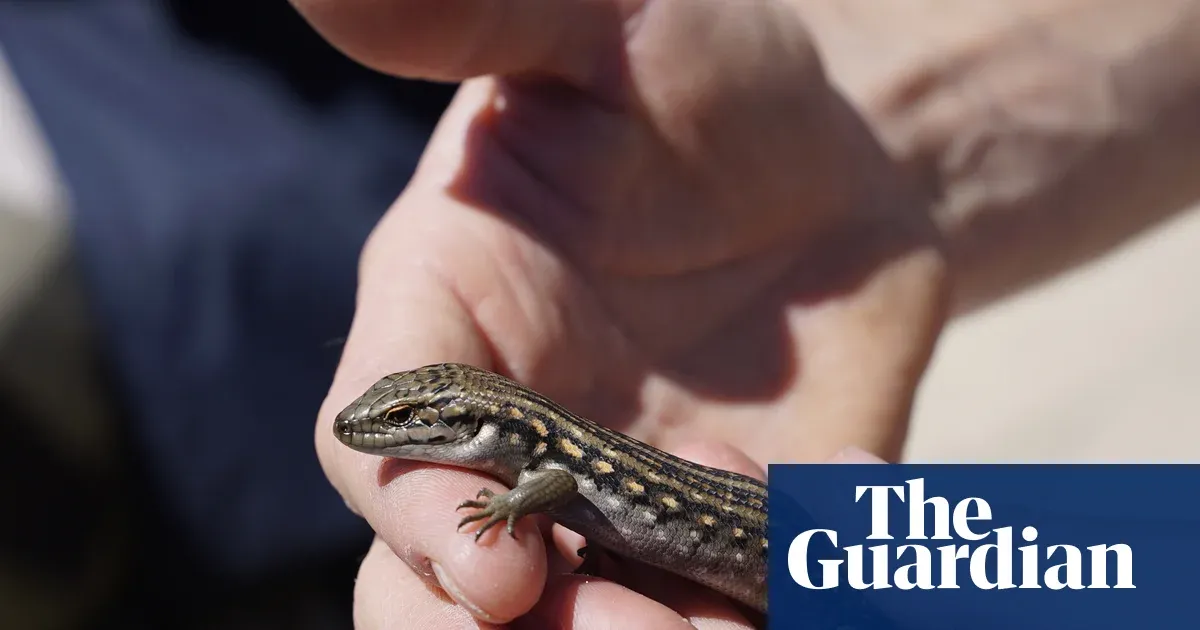
Eleven endangered guthega skinks released into a gated enclosure in Victoria’s Alpine National Park could soon become 13, with a female known as Omeo due to give birth in March, the conservation project says. One of Australia’s only alpine lizards, guthega skinks live on "sky islands" above 1,600 metres in two isolated locations: the Bogong high plains in Victoria and Mount Kosciuszko in New South Wales.
"They’re extremely vulnerable," said skink specialist Dr Zak Atkins, with warming climates shrinking their alpine zone and more frequent bushfires posing an additional threat; multiple colonies were lost in the 2003 fires. A captive breeding programme by Zoos Victoria culminated in the release to a specially designed enclosure furnished with granite rocks and hundreds of plants, including alpine mint bush and snow beard-heath, the skinks’ favourite food.
In December seven skinks joined an initial cohort of four, and all have survived so far. Scientists expect Omeo will have two babies based on a physical examination. Adult skinks are camouflaged brown and grow to about a ruler’s length, while the young are tiny — "about the weight of a button" — and jet black with vibrant yellow spots.
Dr Joanna Sumner of Museums Victoria said guthega skinks belong to an evolutionary group that live in close-knit family units, with females typically producing only one or two offspring a year.
guthega skink, endangered guthega skink, omeo, alpine national park, bogong high plains, mount kosciuszko, zoos victoria, healesville sanctuary, dr zak atkins, dr joanna sumner, grace rouget, associate prof ailie gallant, snowline ecology, museums victoria, monash university, captive breeding programme, gated enclosure, alpine mint bush, snow beard-heath, alpine lizards, warming climates, 2003 fires, hibernating under snow, close-knit family units, genetic diversity, victorian population