
Expedition 74 crew studies cardiac health and AI as Dragon reboosts station orbit
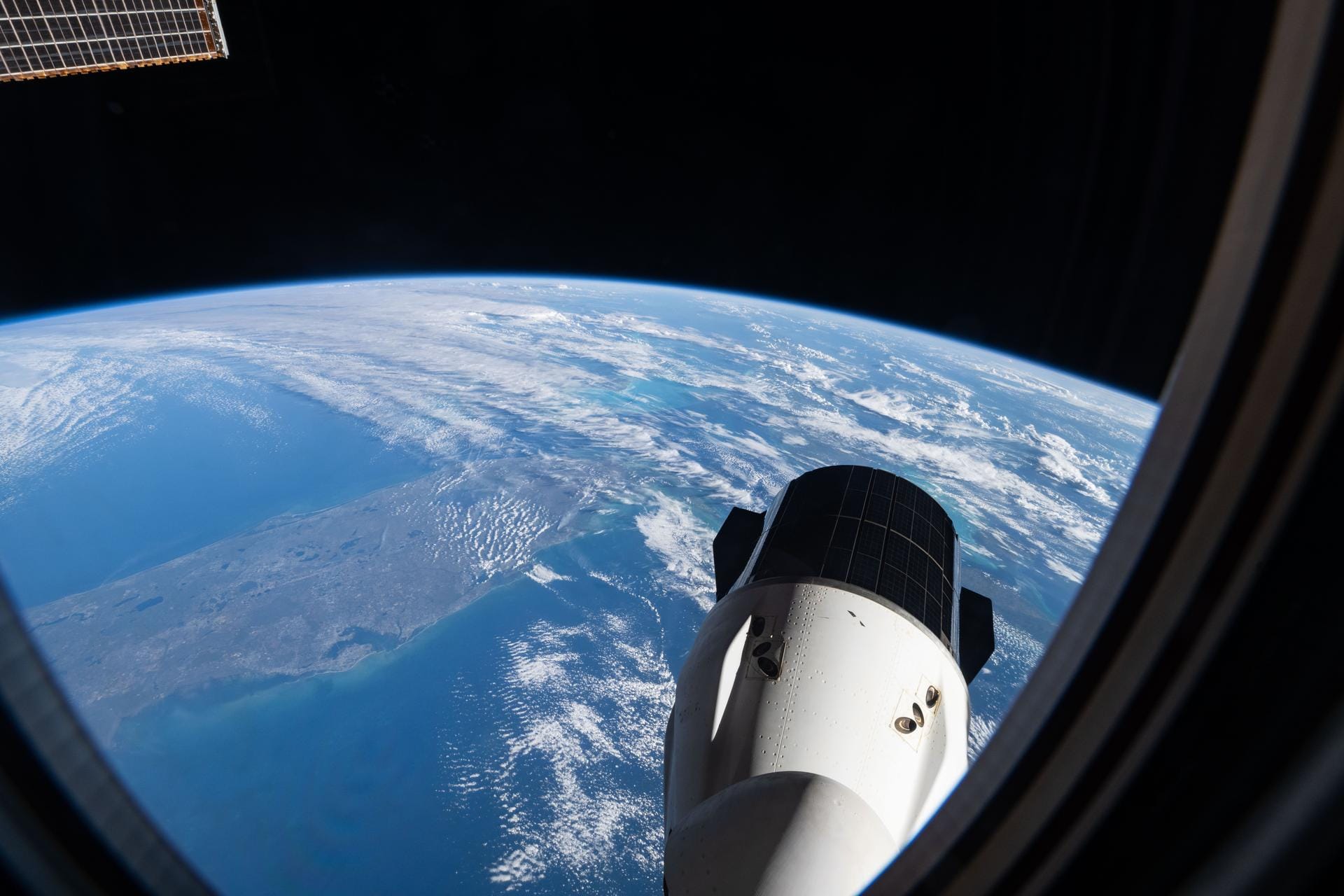
Expedition 74 crew members conducted cardiac research and tested artificial intelligence tools aboard the International Space Station on Friday, Jan. 23, while the SpaceX Dragon spacecraft fired its thrusters to raise the station’s orbit. NASA Flight Engineer Chris Williams set up the Ultrasound 2 device in the Columbus laboratory, attached electrodes to his chest, and scanned his neck, chest, and leg vessels with support from doctors on the ground as the electrodes measured his heart’s electrical activity.
He then jogged on the COLBERT treadmill wearing a heart monitor and exercised on the advanced resistive exercise device while his movements were tracked. Doctors will use the biomedical data to understand how living and working in space long-term affects the cardiovascular system.
Roscosmos cosmonauts Sergey Kud-Sverchkov and Sergei Mikaev tested AI-assisted tools in the Zvezda service module to convert speech-to-text and improve data handling and communications between the crew and ground controllers; researchers seek to use the technology to speed up and increase the accuracy of crew documentation.
Kud-Sverchkov also serviced the Elektron oxygen generator, collected air samples from the station’s Roscosmos segment, and cleaned ventilation fans inside the Soyuz MS-28, while Mikaev deactivated physics research gear used for observations of crystallization, plasma behavior, and radiation effects and inventoried computer and electronics gear.
Key Topics
Science, International Space Station, Dragon Spacecraft, Chris Williams, Sergey Kud-sverchkov, Sergei Mikaev