
Fake-wood slab was the most surprising thing at Logitech HQ
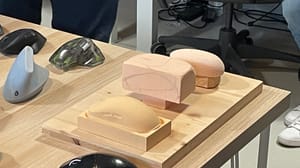
During a recent visit to Logitech, I saw a lot of engineering and testing kit—giant antennas, padded rooms, and machines that swipe mice. Still, the thing that surprised me most was a block of wood in the company's design room: a piece of chemical wood, more like plastic but worked on physically like wood, sitting beside half-finished mouse prototypes with pencil marks on it.
I had assumed everything would start in CAD or on a 3D printer—there were three printers chugging away in the studio—so the hands-on approach felt old school. Jinkinson explained the appeal plainly: "Because it's instant. You can see it emerging in front of you, so you can fine tune every angle, every bit, and it's one to one size, you can touch it.
That's something software basically can't replicate." He added that the tactile process helps designers judge form, proportion and touch: "To me, it's reassuring as a designer to have those classic, timeless skills... you really feel like you own it, like your little baby that you just hatched.
logitech, fake wood, chemical wood, physical prototype, mouse prototype, 3d printer, cad, tactile design, product design, design studio