
Gambia supreme court hears challenge to ban on female genital mutilation
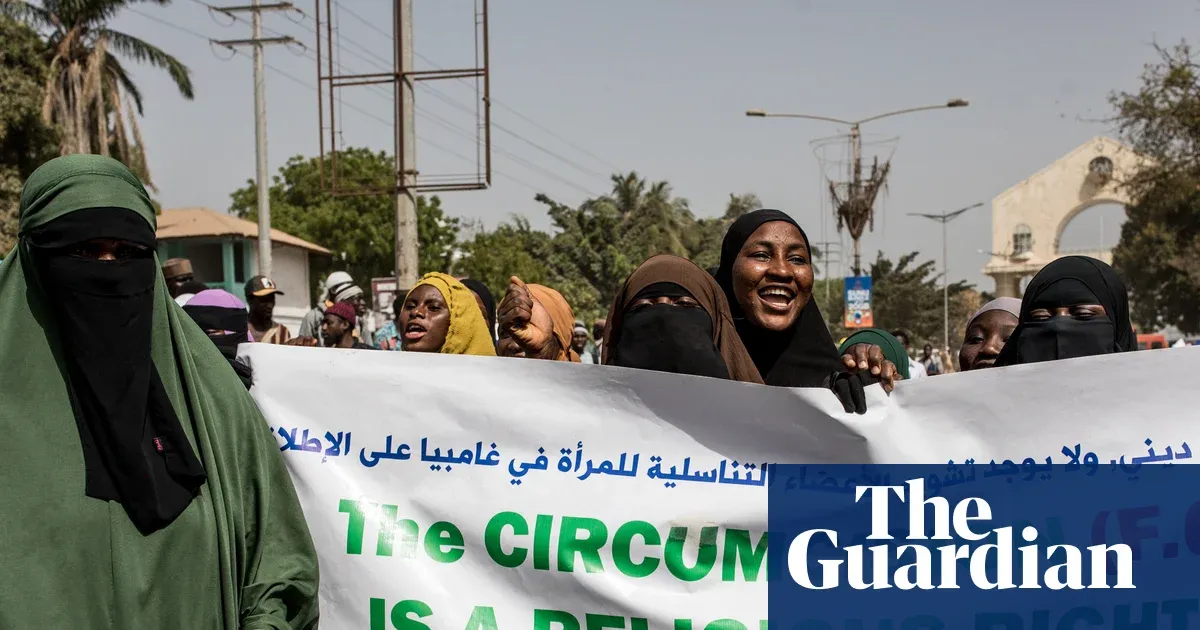
A group of religious leaders and an MP have launched a case at the Gambia’s supreme court seeking to overturn the country’s ban on female genital mutilation (FGM). The court case, due to resume this month, follows two babies who bled to death after undergoing FGM in the Gambia last year.
The challenge was brought after MP Almameh Gibba tabled a bill to decriminalise FGM that was rejected by parliament in 2024. The practice remains common in the Gambia: almost three-quarters of women aged 15 to 49 have undergone FGM and nearly two-thirds of them were cut before the age of five.
Under current law a cutter faces up to three years in prison, a fine of 50,000 dalasi or both, and where FGM leads to death the perpetrator could face life imprisonment. The plaintiffs say the law violates constitutional rights to cultural and religious freedoms. The court has heard from two witnesses so far: Abdoulie Fatty, a leading imam, said female circumcision, though not mutilation, was part of Islam and told the court, "We are Muslims and if someone dies, it’s God’s will." Fuambai Sia Nyoko Ahmadu, founder of a pro-FGM organisation, is also due to give evidence and co-wrote that "a ubiquitous 'standard tale' obscures the diversity of practices, meanings and experiences among those affected." Lamin J Darboe, a UK-trained lawyer with dual British–Gambian citizenship, is representing the plaintiffs.
Activists and lawyers view the case as part of a wider backlash against women’s rights.
Key Topics
Politics, Female Genital Mutilation, The Gambia, Almameh Gibba, Abdoulie Fatty, Lamin J Darboe