
Greenland’s melting ice affects sea levels, shipping and mineral access
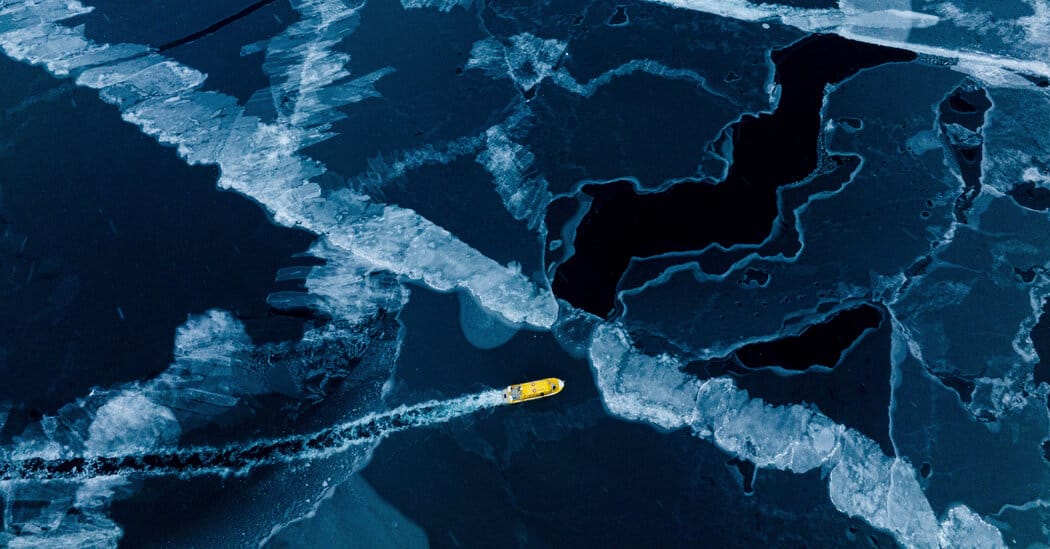
Greenland, the world’s largest island, is losing ice at a rapid pace, with scientists at the Danish Meteorological Institute reporting a loss of 105 billion metric tons of ice in the 12 months ending Aug. 31, 2025, a trend driven by Arctic warming that is at least twice as fast as the rest of the planet.
Researchers say Greenland’s ice sheet has thinned for 29 years and shrank by nearly 2,000 square miles from 1985 to 2022, according to a study in Nature. Melting adds fresh water to the ocean and raises sea levels — the global sea level has risen about four inches since 1993 — reduces reflective ice cover that keeps oceans cooler and, recent research suggests, may be helping to slow a network of ocean currents with potential impacts on weather patterns.
“Greenland is sort of on an unstoppable trajectory to melt,” Sarah Das, a glaciologist and scientist emeritus at the Woods Hole Oceanographic Institution, said in the article. Melting is also opening economic and geopolitical questions. Greenland, a semiautonomous Danish territory, sits atop minerals including graphite, zinc and rare earths — resources the European Union considers important for renewable technologies — and a majority of the bloc’s identified critical raw materials can be found there.
Key Topics
World, Greenland, Greenland Ice Sheet, Sea Level Rise, Polar Silk Road, Rare Earths