
Hive minds resurge in TV and film as threats and moral puzzles
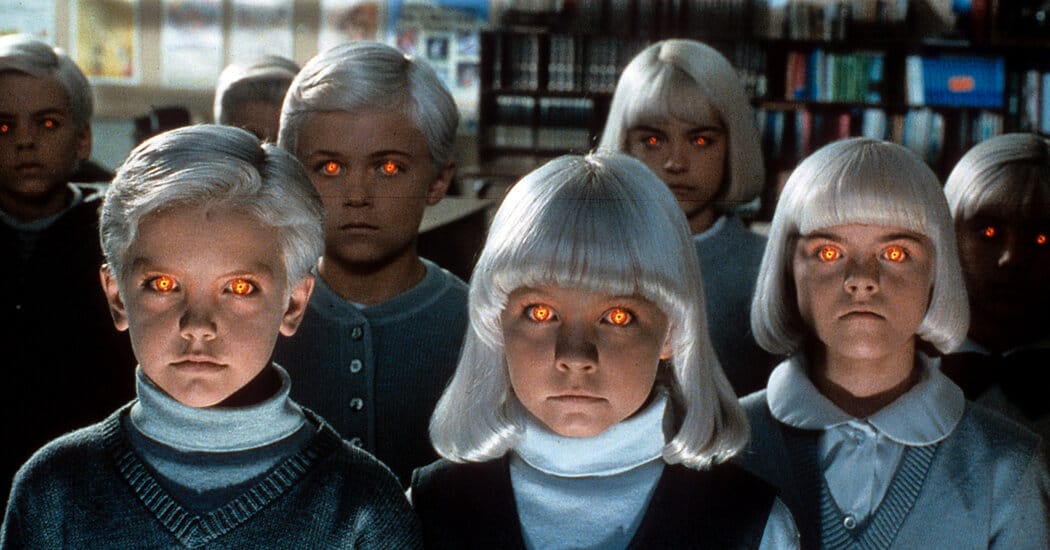
Maya Phillips writes in a New York Times Critic’s Notebook that hive minds — collective consciousnesses that erase or subsume individuals — are appearing more often across contemporary TV and film. The piece traces the device from early examples like Village of the Damned to recent work: Apple TV’s Pluribus depicts a biological hive that spreads after a scientist is bitten by an infected rat and then transmits the condition by kissing a colleague; Stranger Things’ Vecna lures victims and encases them in fleshly cocoons, maintaining psychic links even after escape; and the Borg of Star Trek are cyborg drones sometimes guided by a Borg Queen, epitomizing a mechanized threat.
Phillips also highlights the unsettling image of weaponized children in the horror film Weapons, controlled by a witchy guardian figure until a child turns the hive against her. Phillips notes that depictions vary in moral framing: Orson Scott Card’s Ender saga casts a collective enemy later revealed to be wrongly attacked; Jack Finney’s Body Snatchers have been read as parasitic and as a Cold War-era metaphor for communism; and in Rick and Morty the collective Unity is first shown as hedonistic and then as ethically fraught, with characters debating whether enforced harmony is preferable to freedom.
Key Topics
Culture, Hive Mind, Pluribus, Stranger Things, Borg, Weapons