
Hot-water drilling begins through Thwaites Glacier to study melting
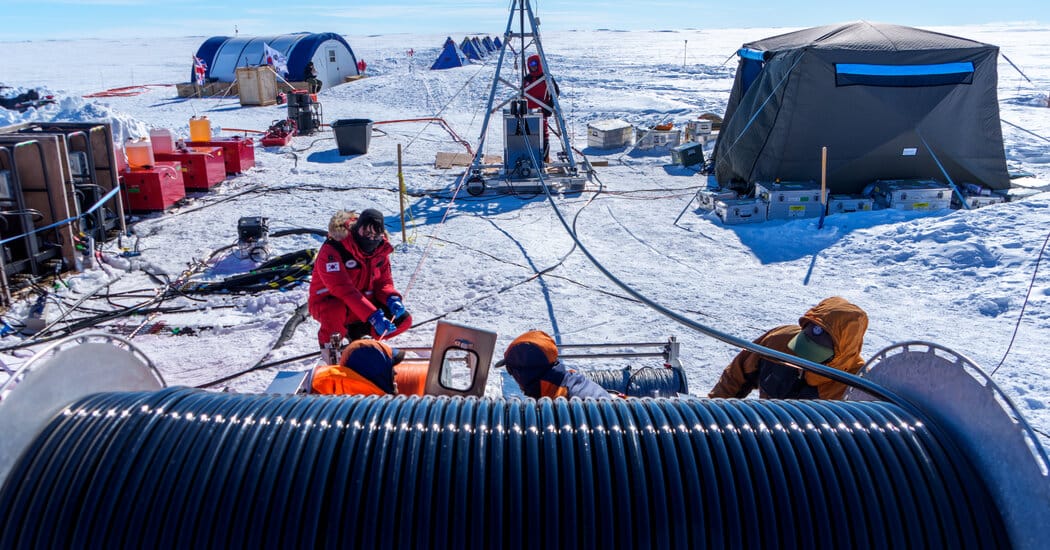
British and South Korean researchers on Wednesday, Jan. 30, 2026, began boring a deep hole through the Thwaites Glacier in Antarctica to study the warm ocean currents that are melting the glacier from below. The team hopes to place instruments in the waters beneath the glacier’s floating end because oceangoing robots are too large to explore the deepest reaches under Thwaites, and scientists fear that continued erosion of the floating ice could lead the rest of the glacier to slide into the ocean, adding to global sea-level rise.
A 10-person crew set up a hot-water drilling system made up of hoses, winches, pumps, heaters, water tanks and gasoline-powered generators. The system heats water to about 80 degrees Celsius (176 degrees Fahrenheit) and shoots it through a drilling hose; near the surface the hose can melt more than a meter of ice per minute, though the rate slows as the water cools on its way down.
Researchers first bored two nearby holes roughly 375 feet deep and connected them at the bottom by carving a bulbous cavity to hold water for recycling. Meltwater collected in the cavity is pumped up through the second hole, reheated and reused for further drilling. When the team lowered a camera into the borehole they found the upper walls smooth but, starting at about 50 feet, large chunks were missing and deep, twisting crevasses appeared.
thwaites glacier, hot-water drilling, british antarctic survey, south korean researchers, warm ocean currents, meltwater recycling system, borehole camera footage, crevasses in thwaites, instruments beneath thwaites, sea-level rise risk, 80 degrees celsius, 375 feet deep holes