
Hurricane Melissa stirred a vast bright-blue carbonate plume south of Jamaica
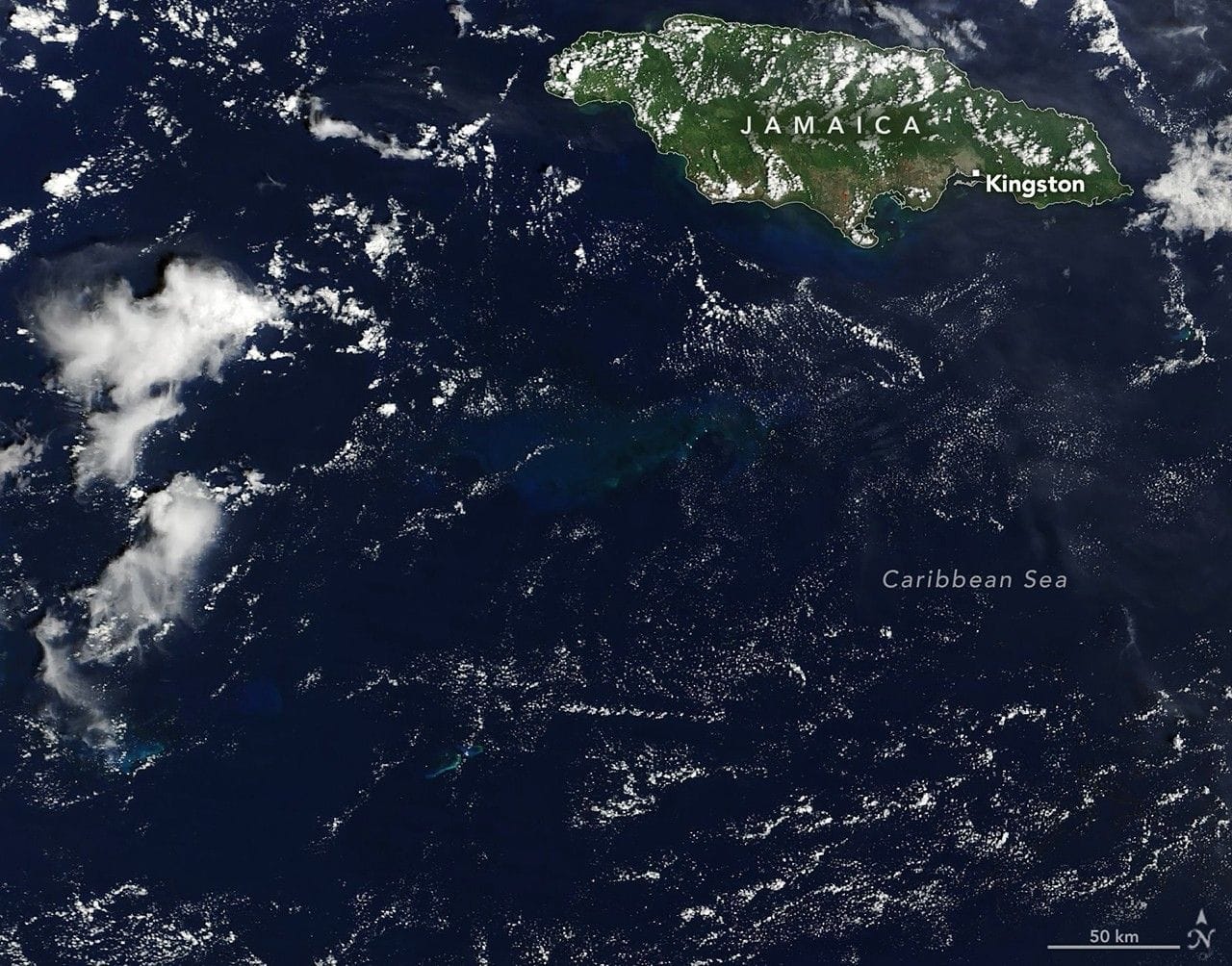
Hurricane Melissa, which made landfall in Jamaica on October 28, 2025 as a category 5 storm with sustained winds of 295 kilometers per hour (185 miles per hour), churned carbonate sediment off the island and produced a bright-blue plume visible in satellite images on October 30, 2025.
NASA’s Terra satellite MODIS image showed large areas colored bright blue by suspended calcium carbonate (CaCO3) mud from Pedro Bank, a submerged carbonate plateau about 25 meters deep and slightly larger in area than Delaware. The material, composed mainly of remnants of marine organisms on the plateau, contrasted with the greenish-brown river-borne sediment from Jamaica’s southern coast.
James Acker, a data support scientist at NASA Goddard, said the storm generated "tremendous stirring power," and noted that earlier storms produced much smaller brightening. Sedimentologist Jude Wilber estimated Melissa affected about 37,500 square kilometers—more than three times the area of Jamaica—and said the suspended sediment acted as a tracer for currents and eddies, some feeding into the Caribbean Current and some suggesting Ekman transport.
Wilber described complexities in the south-flowing plume, including a division into three parts after encountering reefs and sinking sediment that showed a cascading stair-step pattern. The temporary coloration faded after about seven days as sediment settled.
Key Topics
Science, Hurricane Melissa, Jamaica, Pedro Bank, Modis, Calcium Carbonate