
Kochi-Muziris Biennale foregrounds process and unfinished works
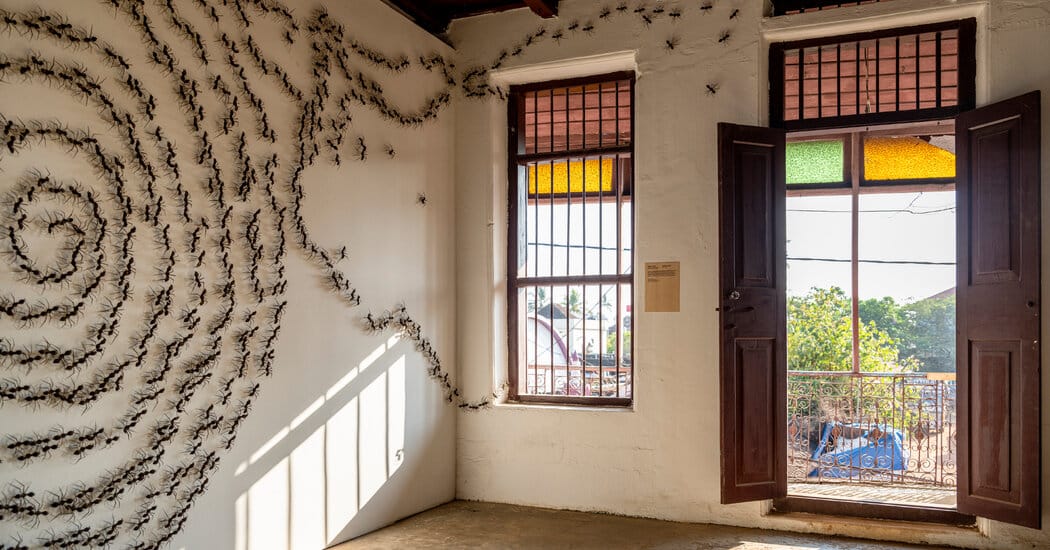
The sixth Kochi‑Muziris Biennale in Kochi, India, titled "For the Time Being," is foregrounding process and unfinished works at what the paper calls Asia’s largest noncommercial art event. The exhibition is on view through March 31. According to The New York Times critic, the show emphasises works presented as ongoing projects, often marked with timestamps in wall text.
Examples cited include Hicham Berrada’s "2007‑ongoing" beaker experiment, Adrián Villar Rojas’s "2015‑ongoing" decomposing still lifes and Kulpreet Singh’s "2022‑ongoing" performance involving burned paddy stubble. The critic noted a prevalence of organic materials and politically framed wall text; lead curator Nikhil Chopra, co‑founder of the Goa collective HH Art Spaces, said he dislikes the term "Global South" and that the festival seeks to "break the stereotypes of what it means to be making contemporary art in India." Chopra and HH selected 66 artists for the main venues and complied with a 50 percent quota of Indian and Keralan artists, the critic reported.
Notable works mentioned include Tom Vattakuzhy’s frank watercolor of Mahatma Gandhi, Sandra Mujinga’s fishing‑net‑shrouded steel forms, LaToya Ruby Frazier’s "Water is Life" banner, Cinthia Marcelle’s functioning repair shop and German artist Anja Ibsch’s on‑site studio. The critic also wrote that a Last Supper piece replacing Christ with Mata Hari was removed this month after protests by local Christians.
Key Topics
Culture, Kochi-muziris Biennale, Kochi, India, Nikhil Chopra, Hh Art Spaces