
Total lunar eclipse will redden the Moon on March 3, 2026
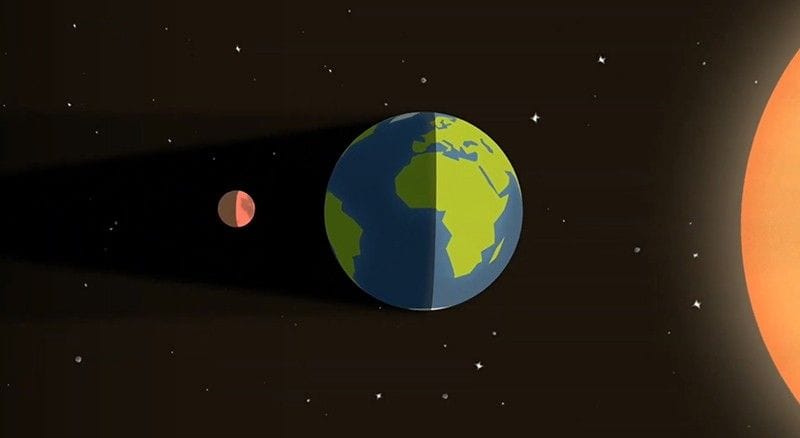
A total lunar eclipse will redden the Moon on March 3, 2026. Totality will be visible in the evening from eastern Asia and Australia, throughout the night in the Pacific, and in the early morning in North and Central America and far western South America; the eclipse will be partial in central Asia and much of South America and not visible in Africa or Europe.
A lunar eclipse occurs when Earth passes directly between the Sun and Moon, casting a shadow across the lunar surface and turning the Moon a deep reddish-orange. This alignment can only occur during a full Moon phase. During totality the Moon appears dark red or orange because most direct sunlight is blocked and the light that reaches the Moon is filtered through Earth’s atmosphere.
You can observe a lunar eclipse without special equipment; all you need is a line of sight to the Moon. For a more dramatic experience, seek a dark environment away from bright lights. Binoculars or a telescope can enhance the view, and for photography NASA advises using a camera on a tripod with exposures of at least several seconds.
Key eclipse times (Pacific Standard Time, Eastern Standard Time, and Coordinated Universal Time): penumbral eclipse begins 12:44 a.m. PST / 3:44 a.m. EST / 8:44 UTC; partial eclipse begins 1:50 a.m. PST / 4:50 a.m. EST / 9:50 UTC; totality begins 3:04 a.m. PST / 6:04 a.m. EST / 11:04 UTC; totality ends 4:03 a.m.
total lunar eclipse, march 3, 2026 lunar eclipse, redden the moon, reddish-orange moon, dark red moon, totality visible eastern asia, totality visible australia, totality in the pacific, partial eclipse central asia, partial eclipse south america, eclipse not visible africa, eclipse not visible europe, penumbral eclipse times, partial eclipse times, totality start time utc, eclipse times pst est utc, observe lunar eclipse, lunar eclipse observing tips, binoculars telescope viewing, lunar eclipse photography, camera tripod exposures, moon in constellation leo, venus saturn conjunction, international observe the moon night, nasa scientific visualization studio