
This Mardi Gras in New Orleans Might Be a Bit Greener
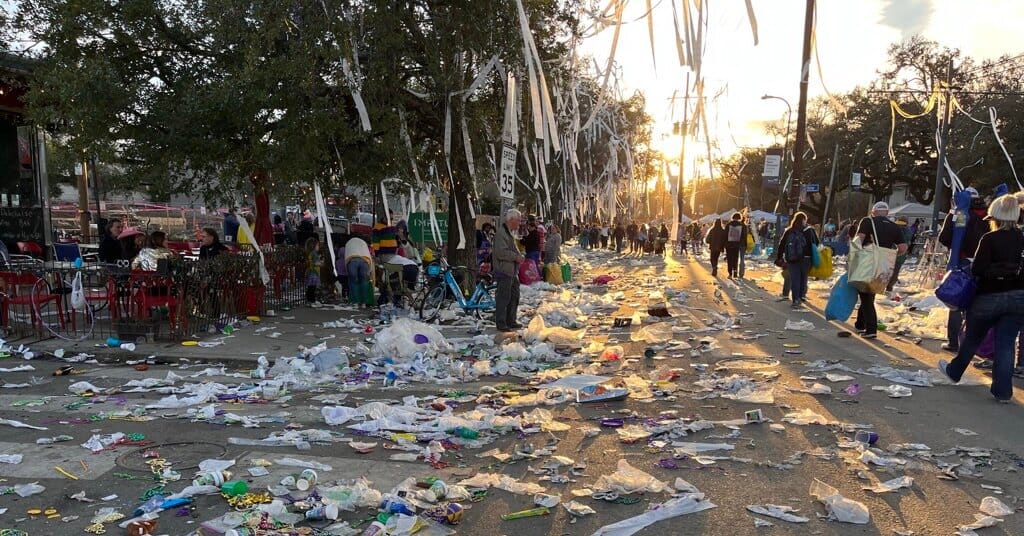
New Orleans’s Mardi Gras has produced more waste in recent years, averaging 1,123 tons a year over the last decade, the Sanitation Department says. Grounds Krewe director Brett Davis called the situation an environmental catastrophe. The region is vulnerable to hurricanes and coastal erosion, and weeks of parading leave plastic beads, cups, doubloons and foam footballs on streets, in trees and in landfills.
A 2013 study found that more than 60 percent of beads contained unsafe levels of lead, and in 2018 the city found 46 tons of beads clogging catch basins. Mardi Gras was less wasteful when krewes tossed glass beads beginning in the 1920s, but cheaper novelty goods from global trade in the 1970s led to larger throw packages.
Those sales became essential to finance modern parades because city laws forbid sponsors or items with logos. The abundance of throws has produced what Davis describes as a carpet or river of waste.
mardi gras, new orleans, beads, waste, lead levels, krewes, doubloons, catch basins, coastal erosion, glass beads