
NASA Completes First Flight of Laminar Flow Scaled Wing Design
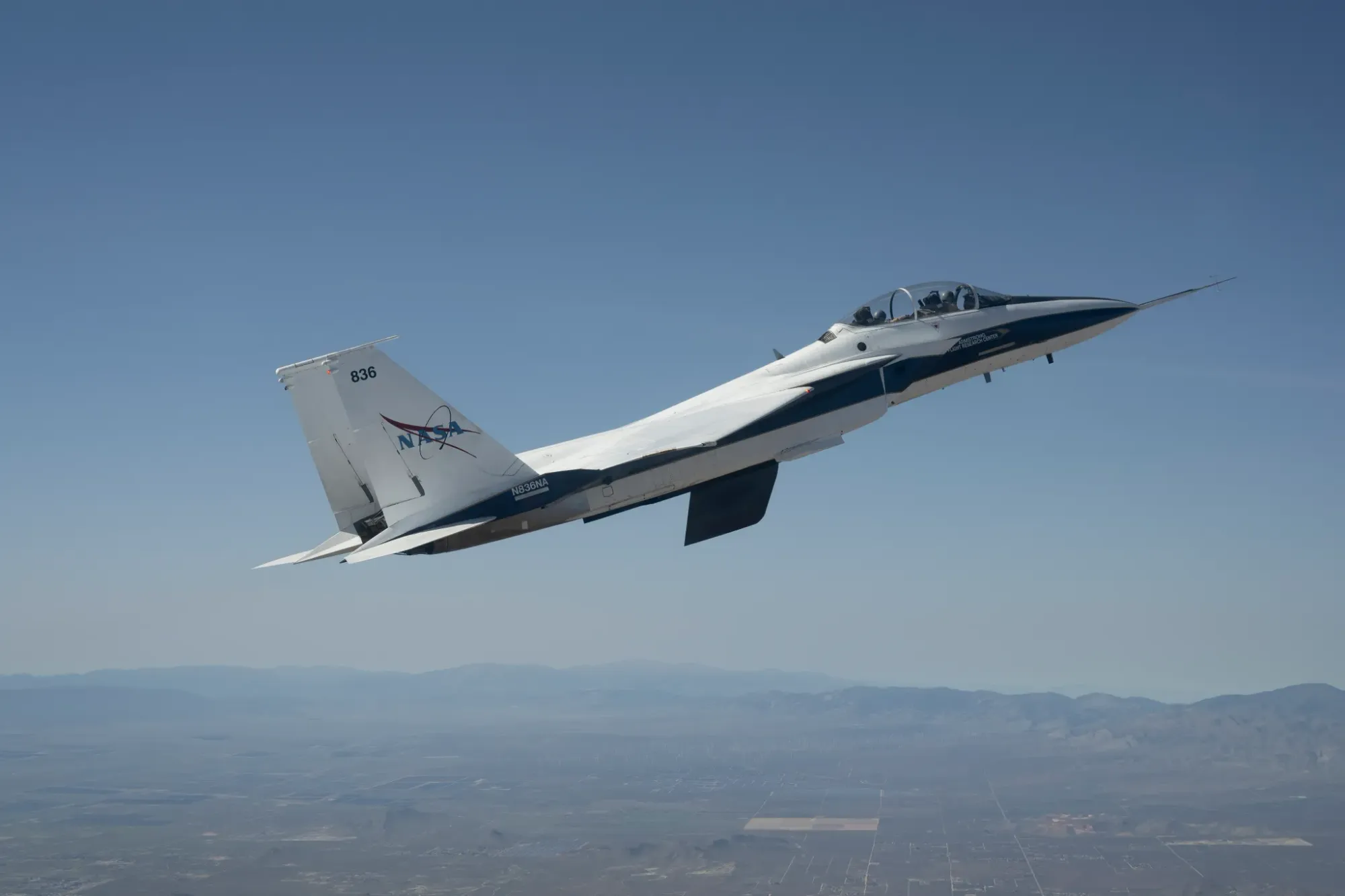
NASA completed the first flight test of a scale-model wing designed to improve laminar flow, reducing drag and lowering fuel costs for future commercial aircraft. The flight took place Jan. 29 at NASA’s Armstrong Flight Research Center in Edwards, California, using one of the agency’s F-15B research jets.
The NASA-designed, 40-inch Crossflow Attenuated Natural Laminar Flow (CATNLF) wing model was attached to the aircraft’s underside vertically, like a fin, and the flight lasted about 75 minutes while the team ensured the aircraft could maneuver safely in flight with the additional wing model.
"It was incredible to see CATNLF fly after all of the hard work the team has put into preparing," said Michelle Banchy, research principal investigator for CATNLF. NASA designed the CATNLF technology to improve the smooth flow of air, known as laminar flow, over swept-back wings by reducing disruptions that lead to drag, a capability that could help lower fuel burn and costs.
United States, Edwards, California
nasa, catnlf, laminar flow, wing design, scale model, f-15b, armstrong flight, edwards california, drag reduction, fuel burn