
NASA to launch Pandora plus two CubeSats to study exoplanet atmospheres
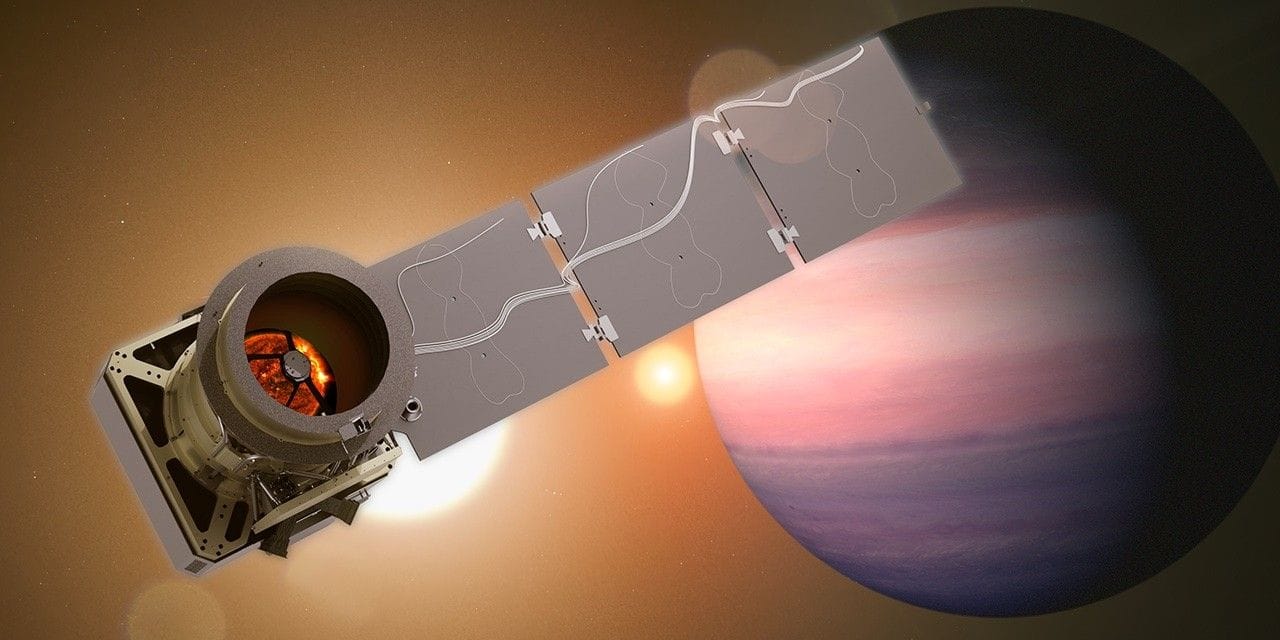
NASA will launch the Pandora spacecraft alongside two shoebox-sized CubeSats, BlackCAT and SPARCS, to study the atmospheres of exoplanets and their host stars. All three missions are set to lift off Jan. 11 on a SpaceX Falcon 9 from Space Launch Complex 4 East at Vandenberg Space Force Base in California; the launch window opens at 8:19 a.m.
EST (5:19 a.m. PST) and SpaceX will livestream the event. Pandora’s goal is to “disentangle the atmospheric signals of planets and stars using visible and near-infrared light,” said Elisa Quintana, Pandora’s principal investigator at NASA’s Goddard Space Flight Center. The satellite will observe transits, when planets pass in front of their stars, and record how starlight filtered through a planet’s atmosphere carries chemical fingerprints.
Because stellar surface features can mimic or mask those signals, Pandora will study at least 20 exoplanets during its first year, observing each system 10 times with 24-hour observation periods using a novel all-aluminum 17-inch (45-centimeter) telescope and a near-infrared detector repurposed from the James Webb Space Telescope.
BlackCAT and SPARCS are part of NASA’s CubeSat programs. BlackCAT will use a wide-field telescope and a novel X-ray detector to study gamma-ray bursts and other transient high-energy events; the mission was designed and built at Pennsylvania State University with contributions from Los Alamos National Laboratory and a spacecraft bus from Kongsberg NanoAvionics US.
Key Topics
Science, Pandora, Blackcat, Sparcs, Vandenberg, Tess