
NASA begins NURTURE airborne campaign to study severe winter storms
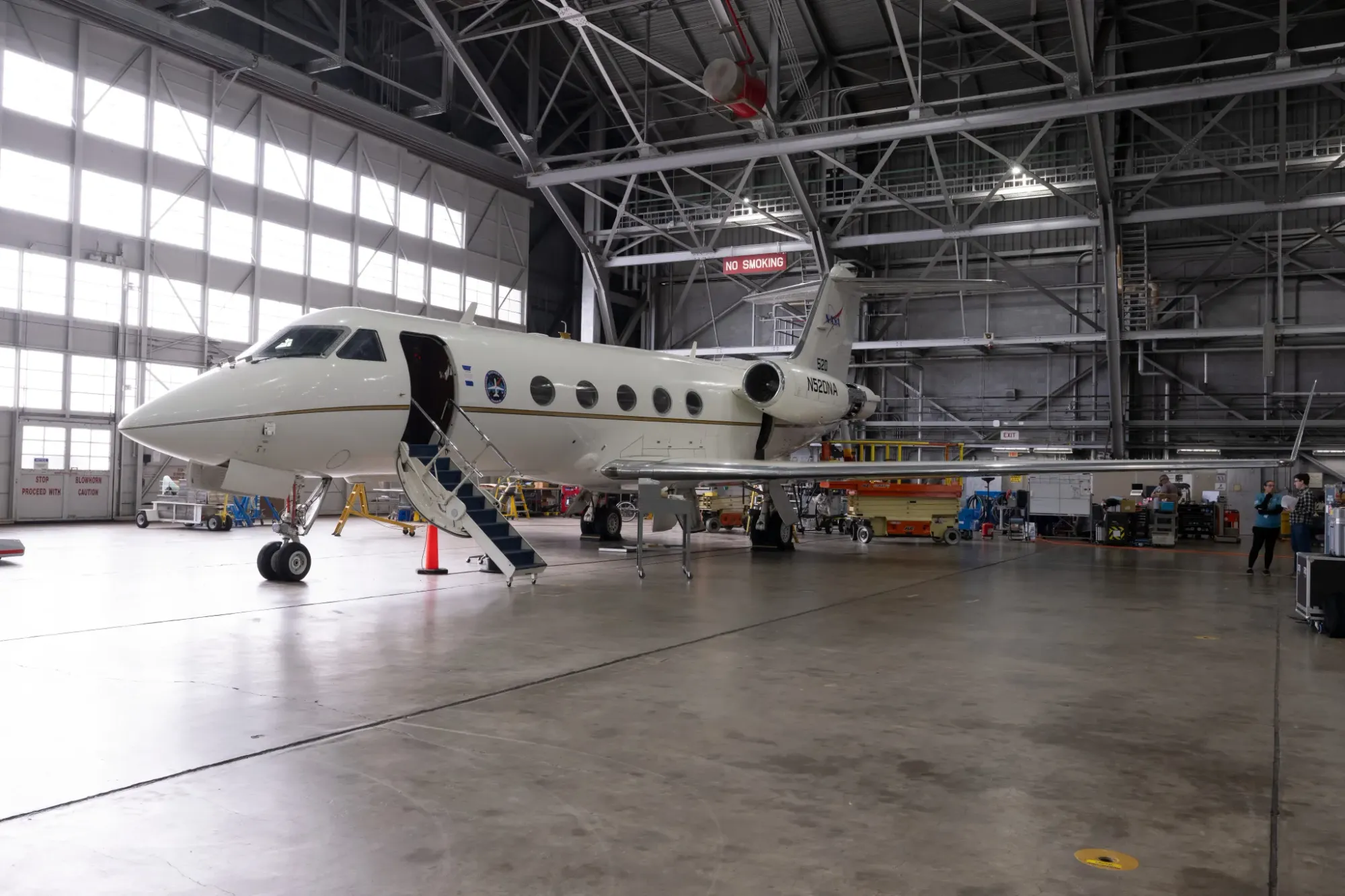
NASA scientists have deployed an airborne campaign called the North American Upstream Feature-Resolving and Tropopause Uncertainty Reconnaissance Experiment (NURTURE) to collect atmospheric data on severe winter storms. The research team departed Jan. 24 from NASA’s Langley Research Center in Hampton, Virginia, aboard the center’s Gulfstream III aircraft headed for Goose Bay, Canada.
The G-III will fly for nearly a month on routes from the North Atlantic over Canada through the U.S. Northeast, measuring moisture, clouds and ozone as winter storms develop. The campaign uses a suite of remote sensing instruments to improve the models that feed storm forecasts and to demonstrate the potential to collect similar observations from space.
Two companion missions are operating alongside NURTURE: the international North Atlantic Waveguide, Dry Intrusion, and Downstream Impact Campaign (NAWDIC) out of Shannon, Ireland, and a NOAA airborne mission studying tropical moisture transport to the Western U.S. Researchers say combining data from these campaigns will help track interacting weather systems to understand the large-scale flows and small-scale features that drive high-impact winter events.