
NASA-linked study suggests Alfvén waves power auroral arcs
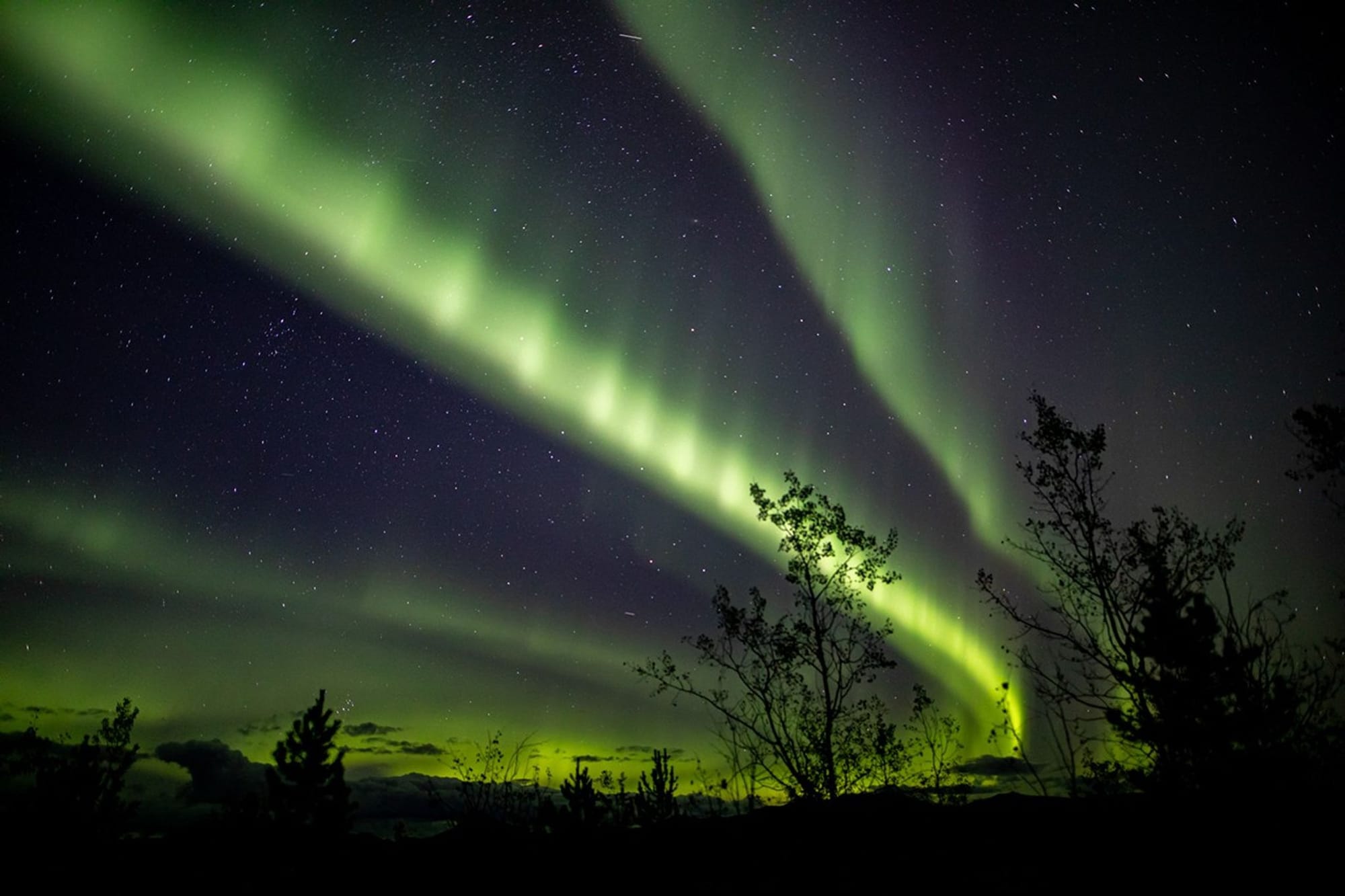
Scientists analyzing archived NASA observations say they may have solved what powers auroral arcs: space waves called Alfvén waves, according to a team led by Sheng Tian of the University of California, Los Angeles. The team found simultaneous observations of an auroral arc from April 2015, and their results were published in Nature Communications on Jan.
13. Auroral arcs appear from the ground as green, glowing curtains and from space as thin, green lines slicing across the atmosphere. Scientists already know arcs form when electrons, accelerated by electric fields in space, slam into atoms in the atmosphere and release light; those electric fields act like a "space battery." To search for what energizes that space battery, Tian’s team scoured archived observations and identified coordinated measurements made in April 2015 by NASA’s Van Allen Probes, the U.S.
military’s Defense Meteorological Satellite Program F19 spacecraft, and ground-based cameras for NASA’s THEMIS mission. Those combined viewpoints covered the event long enough to reveal more about the space conditions that helped create the arc. The published results suggest the electric fields that accelerate the electrons were energized by Alfvén waves, which travel along Earth’s magnetic field lines.
alfvén waves, auroral arcs, sheng tian, van allen probes, themis mission, defense meteorological satellite program f19, electric fields in space, space battery, april 2015 aurora, nature communications paper, juno spacecraft, jupiter auroral arcs