
Networks keeping NASA’s Artemis II mission connected around the Moon
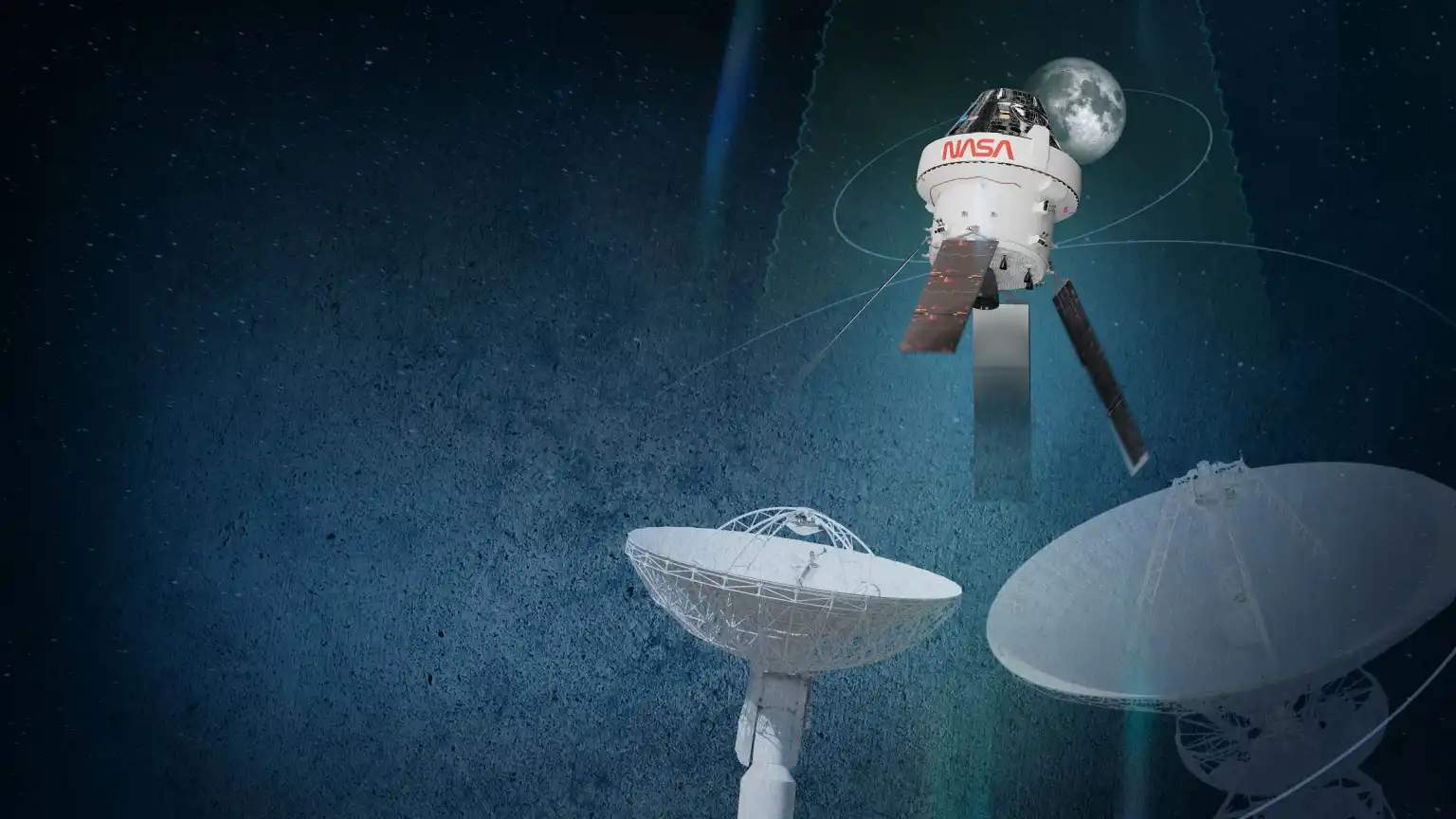
NASA’s Artemis II mission will carry four astronauts around the Moon, and the agency is relying on its Near Space Network and Deep Space Network to carry voice, images, video and mission data during launch, translunar cruise, lunar orbit and return, under oversight by the agency’s SCaN (Space Communications and Navigation) Program office.
NASA’s Mission Control Center at Johnson Space Center in Houston will track the Space Launch System rocket, Interim Cryogenic Propulsion Stage and Orion spacecraft through coordinated handoffs among multiple ground and space assets. "Robust space communications aren’t optional; they’re the essential link that unites the crew and the exploration team on Earth to ensure safety and mission success, as I learned firsthand living and working aboard the International Space Station," said Ken Bowersox, associate administrator for NASA’s Space Operations Mission Directorate.
The Near Space Network, managed by NASA’s Goddard Space Flight Center, will provide communications and navigation for several mission stages using ground stations and relay satellites. After Orion’s translunar injection burn, primary communications support will transition to the Deep Space Network, managed by NASA’s Jet Propulsion Laboratory, whose international array of large radio antennas in California, Spain and Australia provides near‑continuous connection to Orion.
artemis ii, near space network, deep space network, scan program, orion spacecraft, orion artemis ii optical communications system, laser communications systems, deep space optical communications, communications blackout behind moon, translunar injection burn, mission control center, johnson space center, space launch system rocket, interim cryogenic propulsion stage, goddard space flight center, jet propulsion laboratory, deep space network antennas, relay satellites fleet, lunar communications relay and navigation systems, intuitive machines lunar relays, data compression for orion, crew communications priority, ground stations worldwide, antennas in california, antennas in spain, antennas in australia, kevin coggins, ken bowersox