
Peter H. Duesberg, oncogene pioneer turned H.I.V. dissident, dies at 89
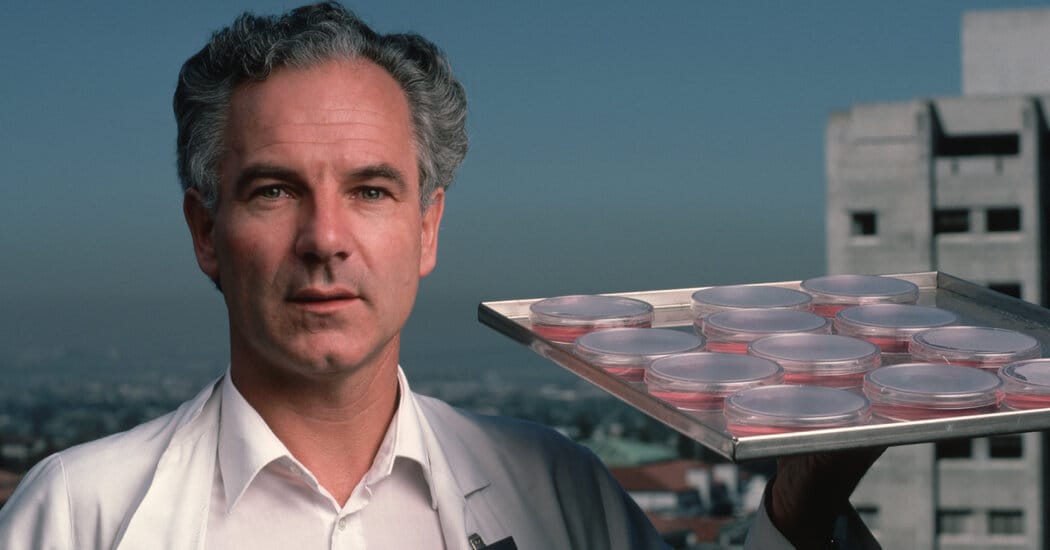
Peter H. Duesberg, a molecular biologist whose early work identified the first known cancer-causing gene and who later became a prominent denier of the link between H.I.V. and AIDS, died on Jan. 13 in Lafayette, Calif. He was 89. His death, at a care facility near his home in Oakland, was from kidney failure, his wife, Sigrid Duesberg, said.
In the late 1960s and early 1970s at the University of California, Berkeley, Dr. Duesberg used oligonucleotide fingerprinting to show that the Rous sarcoma virus carried a gene called Src that could trigger cancer, a finding published in 1970 and described as the first known oncogene.
That work helped set the stage for later discoveries that normal cells carry proto-oncogenes that can become cancer-causing when damaged. Early in his career he received honors including Scientist of the Year in 1971, election to the National Academy of Sciences in 1986 and an Outstanding Investigator Award from the National Institutes of Health in 1986.
Later in his career Dr. Duesberg shifted toward the view that chromosomal damage, not oncogenes, caused cancer and publicly rejected the consensus that H.I.V. causes AIDS. He promoted the theory that poverty, malnutrition, recreational drugs and the antiviral drug AZT were responsible for AIDS and insisted H.I.V.