
Peter Jackson’s Lord of the Rings shows faithfulness can trump accuracy
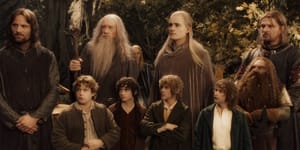
Polygon argues that 25 years after its debut, Peter Jackson’s The Lord of the Rings — back in theaters with overwhelming success — demonstrates that film adaptations need not be strictly accurate to the source to be faithful.
The piece highlights a key change: in the movie’s Council of Elrond scene the Fellowship solemnly swears to escort Frodo, while in the book, two months after Frodo accepts the Ring, Elrond selects the members and tells them they go as “free companions,” with no oath required.
The article says that Tolkien’s original choice underlines his themes: mortals are fallible, everyday choices matter, and even Frodo wavers at the last moment — with Gollum’s intervention ultimately deciding the Ring’s fate.
Polygon contends Jackson’s filmmakers took an artistic license by adding an oath and an epic tone, but that change still preserves the spirit of Tolkien’s work; the director, writers and team showed love and respect for the source, and the films helped many discover the books.
The essay concludes that the trilogy’s lasting box-office and audience appeal 25 years on supports a lesson for adaptations: don’t fixate on exact accuracy — aim for faithfulness to the source’s spirit.
peter jackson, the lord of the rings, council of elrond scene, the ring goes south, frodo hesitation, gollum intervention, adaptation faithfulness, fran walsh, philippa boyens, cinematic epic tone