
Researchers date Mount Rainier’s Electron Mudflow to 1507
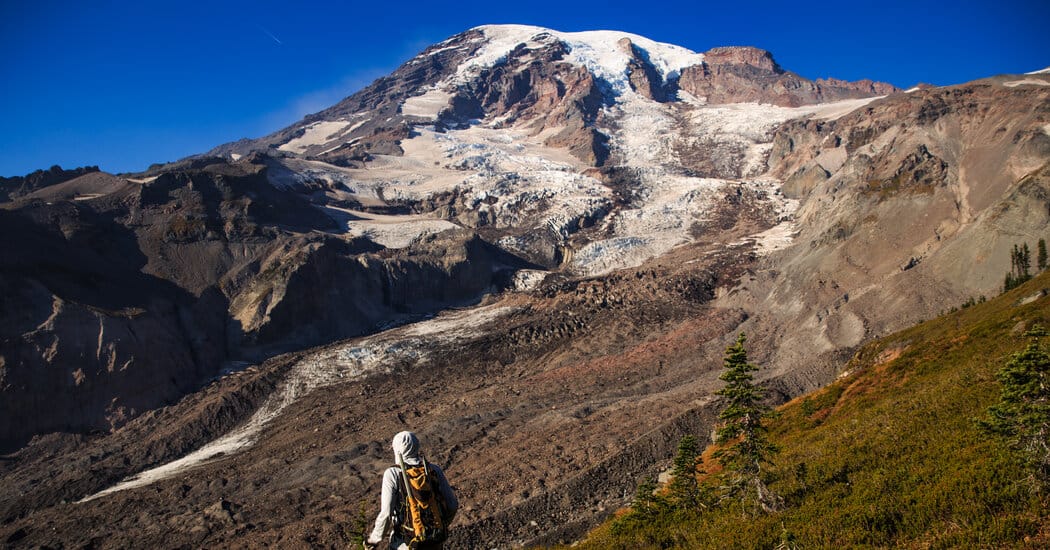
A team of geoscientists reports that the largest Mount Rainier mudflow of the past millennium, the Electron Mudflow, occurred in the year 1507. The finding is based on tree rings from Douglas firs unearthed in the Orting area below the volcano. Lahars — dense flows of mud, rock and water — are Mount Rainier’s greatest hazard, and past events have reached as far as the Puget Sound about 60 miles away.
The Electron Mudflow buried nearby terrain in nearly 20 feet of mud and sent debris up to 35 miles into what is now Orting. Previous estimates had placed the event at roughly 500 years ago, with wide uncertainty. Researchers analyzed wood from 21 Douglas firs collected at construction sites in the 1990s, built a 475-year tree‑ring record and cross‑dated it with living Douglas firs on Vancouver Island to assign calendar years.
Four trees preserved bark and showed that they died in 1507, most likely in mid‑ to late summer, which the team identifies as the timing of the lahar. The dating helps rule out the 1700 Cascadia earthquake and shows no evidence of a sizable volcanic eruption around 1507. The researchers said future work will examine temperature and precipitation records to assess climatic links.
Scientists warn a similar lahar could happen again, and sensors on Mount Rainier aim to give residents time to evacuate; a lahar could reach populated areas in about 45 minutes, the U.S.
Key Topics
Science, Mount Rainier, Electron Mudflow, Orting, Douglas Fir, Dendrochronology