
Study suggests rockhead poacher uses hole in its skull to make buzzing sound
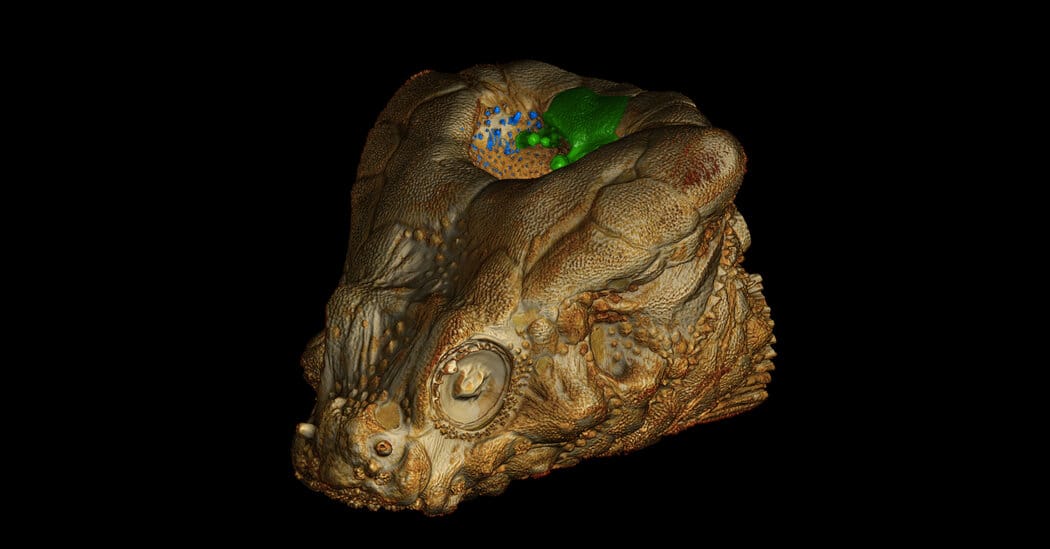
Daniel Geldof’s master’s thesis, presented last year at Louisiana State University, suggests that the rockhead poacher uses the cavity in the middle of its skull as a percussion instrument to produce a buzzing sound. The fish is a member of the Agonidae family found in shallow intertidal parts of the northeastern Pacific Ocean.
Geldof used micro-CT scans to examine the fish’s anatomy and found that the first set of ribs are connected by tendons to the fish’s strongest muscles and are flattened against the head pit, which he proposes act like drumsticks striking the cavity. Scientists had earlier speculated the hole was camouflage, but the pit’s internal tiny structures pointed to a more complex function. The paper places the rockhead poacher alongside other noisy fishes, such as toadfish and catfish, which use different anatomical means to produce sound.
Researchers say the buzzing may help the small, bottom-dwelling fish communicate in the noisy intertidal zone, where sounds can be muffled by waves and moving rocks; the buzz might vibrate against the ground to aid transmission. Colleagues and advisers described Geldof’s methods as a creative way to test a long-standing mystery, and Geldof said he has gone into more anatomical detail than previous students of the species, adding that this is “probably almost certainly not the last you will see of the rockhead poacher.”
Key Topics
Science, Daniel Geldof, Rockhead Poacher, Agonidae, Micro-ct Scanner, Northeastern Pacific