
San Francisco teacher trains students to spot deepfakes and misinformation
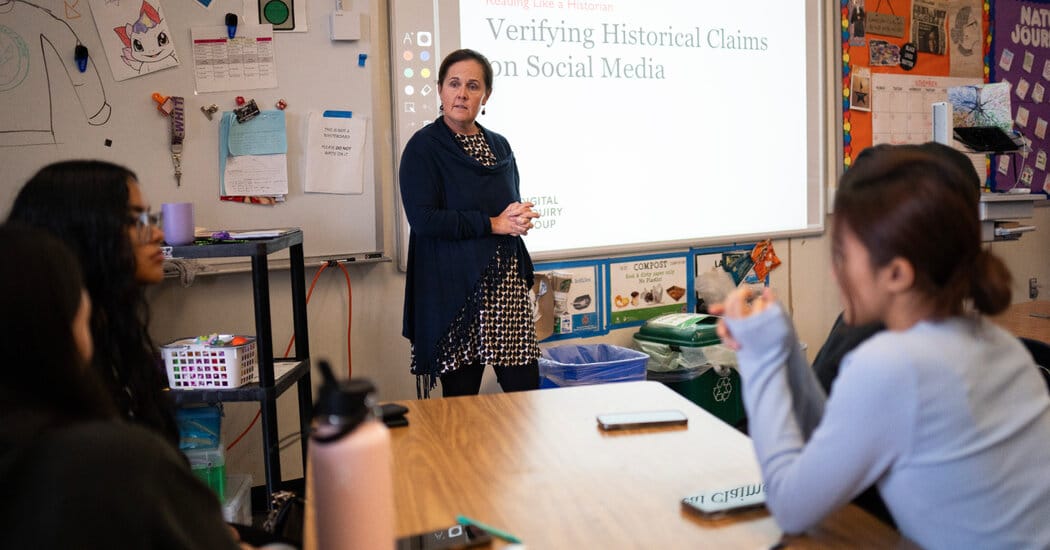
Valerie Ziegler, a government, economy and history teacher at Abraham Lincoln High School in San Francisco, is training her students to identify misinformation and artificially generated content on social media. She asks students to consult multiple sources, recognize rage‑baiting content, consider influencers' motivations and brainstorm ways to distinguish deepfakes from real footage.
Her hands‑on lessons include fact‑checking posts about history on TikTok and examining verification badges that can be bought rather than earned. Ziegler has drawn on her school librarian, the Digital Inquiry Group and Stanford's CRAFT A.I. literacy project. California educators are racing to prepare students as content moderation has weakened and A.I.
advances, but state education officials are not expected to set specific standards until later in 2026. Teachers are cobbling lesson plans from nonprofit groups and updating older coursework. A News Literacy Project survey of 1,110 teenagers found four in ten had any media literacy instruction last year and eight in ten had encountered a conspiracy theory on social media, with many inclined to believe at least one false narrative; students described near‑misses with generated clips and other tells that help spot fakes, while some said they now tend to distrust what they see online, a trend that worries Ziegler.
Key Topics
Culture, Valerie Ziegler, Abraham Lincoln Hs, San Francisco, Ai Literacy, Deepfakes