
Scholars Reassess Thomas Paine as 250th Anniversary of Common Sense Nears
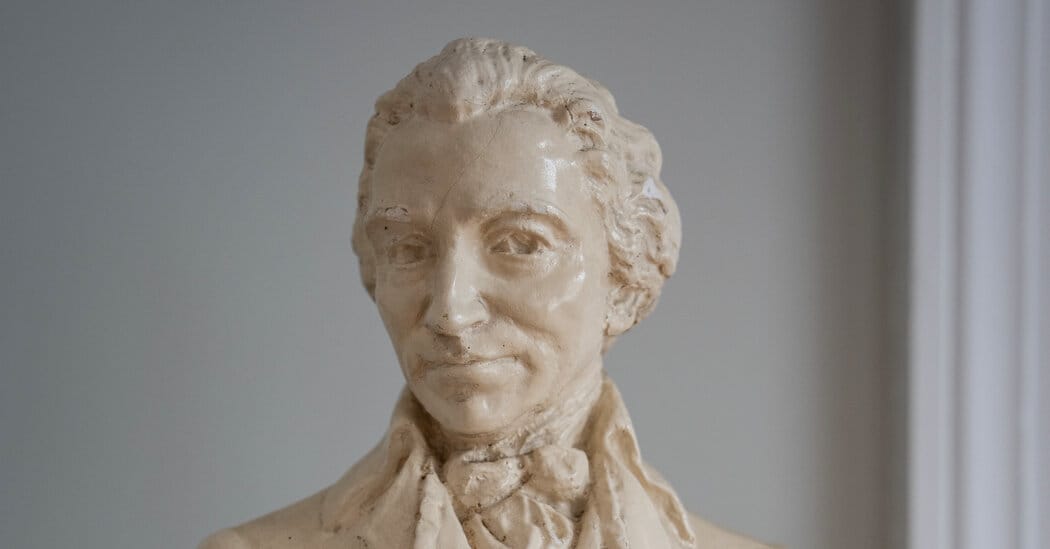
As the 250th anniversary of Common Sense approaches, scholars and cultural institutions are marking the pamphlet’s influence while reassessing Thomas Paine’s life and legacy. Ken Burns’s recent documentary gives Paine prominent attention, and Princeton University Press will publish a six-volume edited collection of his complete works in June, including nearly 300 previously unknown letters, essays and pamphlets.
Born in 1737 in Thetford, England, Paine worked as a corset-maker, sailor and tax collector before arriving in Philadelphia in late 1774, reportedly ill with typhoid. He became editor of the Pennsylvania Magazine and in January 1776 published Common Sense, attributed simply to “An Englishman,” which attacked monarchy and argued that “the law is king.” Paine claimed the pamphlet sold as many as 150,000 copies in three months, a figure recent research has revised downward; scholars note his ideas also spread through newspapers, readings and tavern debate.
Paine’s postwar career was marked by controversy: he criticized the U.S. Constitution as insufficiently democratic, returned to England and later fled to France where he was elected to the National Assembly and imprisoned for opposing the execution of Louis XVI. He was convicted in absentia in London in 1792 for his book The Rights of Man.
He returned to the United States in 1802 and settled on a farm in New Rochelle, where his later years were solitary and, by some accounts, only a handful attended his funeral.
Key Topics
Culture, Thomas Paine, Common Sense, American Revolution, New Rochelle, Ken Burns