
Seismic sensors traced Shenzhou-15 re-entry and narrowed likely impact area
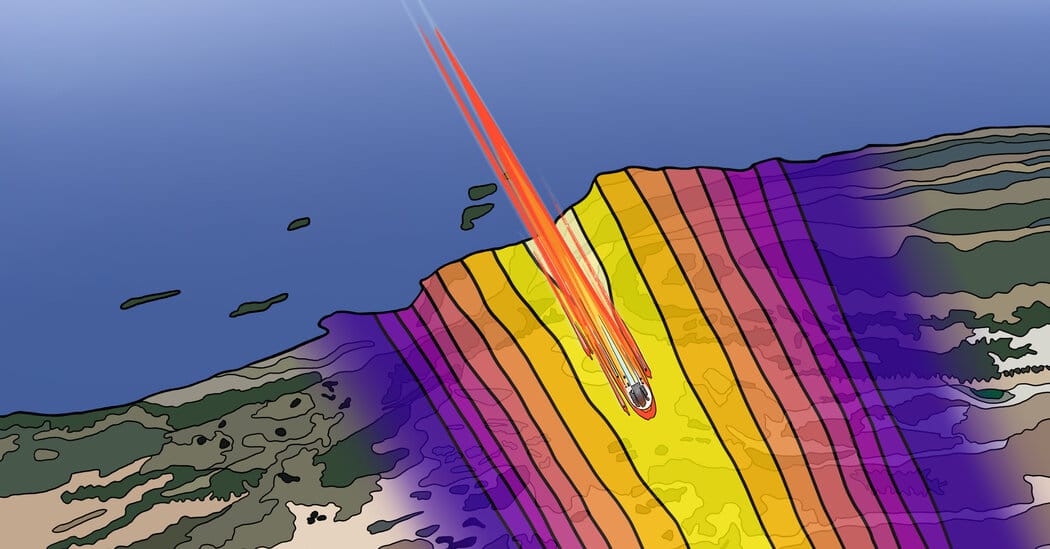
Researchers led by Benjamin Fernando of Johns Hopkins University demonstrated that seismic sensors can be used to map the path of falling spacecraft and narrow where fragments may have landed, after analyzing the uncontrolled re-entry of the Shenzhou-15 orbital module over Southern California on April 2, 2024.
The team showed that seismometers in the Southern California Seismic Network (124 stations) and one station in Nevada registered the sonic booms produced as the 3,300-pound orbital module broke up. The module, released during the 2022 Shenzhou-15 mission and not designed to re-enter, plunged through the atmosphere at hypersonic speeds — the study says it entered moving up to 30 times the speed of sound — producing an initial boom followed by multiple booms that signified rapid fragmentation.
By untangling the seismic signals, the researchers reconstructed the module’s terminal voyage and determined the direction fragments were traveling. The study’s authors say a patch on the California–Nevada border region near Las Vegas would be a good bet if anyone were to look for surviving pieces; to date, no such fragments have been found.
Samantha Lawler, an astronomer not involved in the work, called the study “incredibly useful,” adding that finding pieces would be the real test. The research was published Thursday in the journal Science, and the authors hope to deploy the method for future re-entries.
Key Topics
Science, California-nevada Border, Benjamin Fernando, Johns Hopkins University, Seismometers, Space Debris