
Sorbonne team uses A.I. to produce a play in Molière’s manner
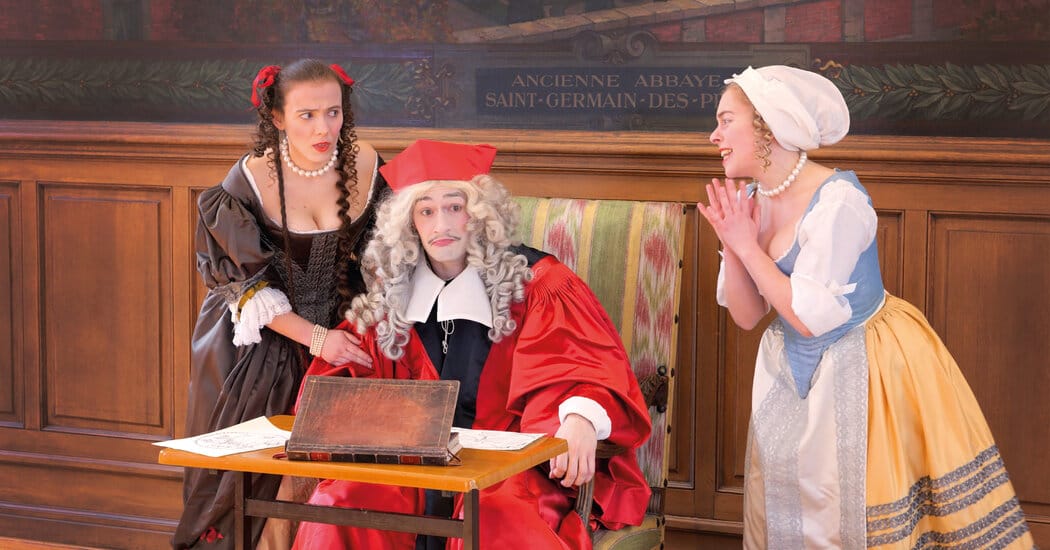
Scholars and artists at Sorbonne University trained artificial intelligence to imitate Molière’s themes, structures and sense of humor, producing a new play called "The Astrologer, or False Omens." The A.I.-written work was developed by the collective Obvious with the Théâtre Molière Sorbonne; an excerpt will be performed at the Centquatre in Paris as part of the Némo festival, and a full staging is scheduled at the Royal Opera of Versailles in May.
The project was carried out over two years and, Bouffard said, driven by "scientific curiosity." The collaboration was organized by Pierre‑Marie Chauvin and led by Obvious, a collective known for algorithmic visual art that sold at Christie’s in 2018 for $432,500; Obvious opened a research laboratory within Sorbonne University three years ago.
Georges Forestier proposed the play’s main theme, human credulity, and suggested an astrologer as an antihero; after Forestier died in 2024, Mickaël Bouffard continued the work. The creative team experimented with different prompts and programs trained on Molière’s corpus, struggled with the A.I.’s tendency to lose earlier material, revised the synopsis 15 times, and solicited feedback from Molière scholars such as Lise Michel, who said she approached the synopsis review as "a game." Separate A.I.
models were also used to create historically informed sets, costumes and music.
Key Topics
Culture, Obvious, Sorbonne University, Theatre Moliere Sorbonne, Centquatre, Royal Opera Versailles