
Spanish Bone May Be First Direct Evidence of Hannibal’s War Elephants
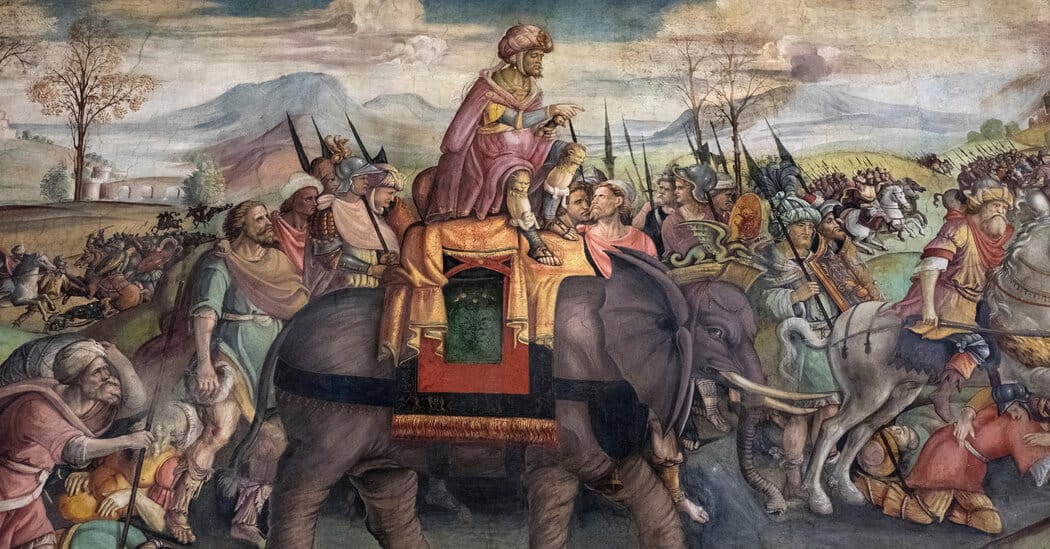
Archaeologists have uncovered a baseball-size ankle bone near Córdoba that may be the first direct archaeological evidence of Hannibal’s war elephants. Tucked in rubble with Carthaginian coins from the third century B.C., the 2,200-year-old specimen was found alongside catapult ammunition, a detail Dr.
Fernando Quesada Sanz of the Autonomous University of Madrid described as a “landmark” connection to Hannibal’s campaigns in a study published last month in The Journal of Archaeological Science: Reports. Comparisons with anatomical collections at the University of Valladolid and Leiden University, and measurements against Asian elephant and steppe mammoth samples, identified the fragment as the third carpal from an elephant’s right foreleg.
The fossil was not from the 37 elephants that crossed the Alps in 218 B.C., but Dr. Quesada suggested it could belong to an animal used in Spain as part of Hannibal’s shock force, possibly against the Carpetani tribe.
Spain, Córdoba
hannibal, war elephants, córdoba, carthaginian coins, ankle bone, catapult ammunition, fernando quesada, third carpal, asian elephant, carpetani tribe