
Supreme Court considers whether states can ban trans women from women’s sports
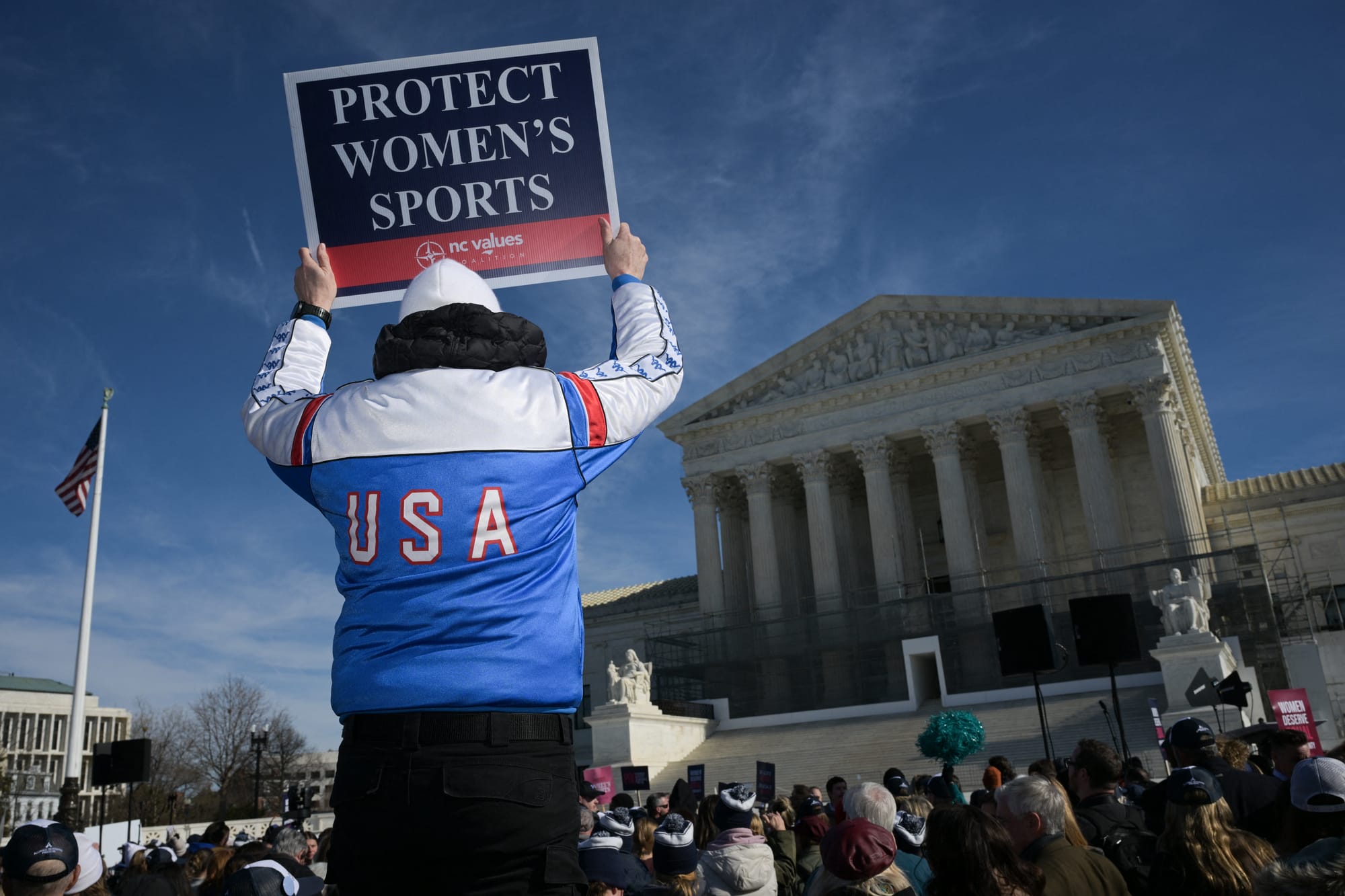
On Jan. 13, the Supreme Court heard oral arguments in West Virginia v. BPJ and Little v. Hecox, two cases that could determine whether states can ban trans women and girls from competing in women’s sports — a decision that could uphold exclusions nationwide. The author attended rallies outside the Court supporting trans athletes’ right to play and found pro- and anti-trans demonstrations side by side.
The piece describes approaching protesters who carried signs reading “Save Women’s Sports” or “Protect Women’s Sports” and reports that many of those protesters said they did not follow women’s sports or could not name multiple current professional women athletes. The article notes broader context: women’s sports, the author argues, were created to address past exclusion, and framing the debate solely around fairness ignores how many advantages already exist in athletics.
It cites a 2024 figure — fewer than ten trans-identifying athletes among roughly 500,000 NCAA athletes — and records that in Feb. 2025 the NCAA issued a news release saying, “A student-athlete assigned male at birth may not compete for an NCAA women’s team.” It also raises practical questions about enforcement, the history of sex testing, and disproportionate impacts on women of color.
The author points to moments that complicate the narrative — citing the 2022 tie between Riley Gaines and Lia Thomas — and says many questions about how bans would be implemented remain unanswered.
Key Topics
Politics, Trans Athletes, Supreme Court, Ncaa, Sex Testing, Lia Thomas