
'To Be or Not to Be' appears twice in Chloé Zhao’s film Hamnet
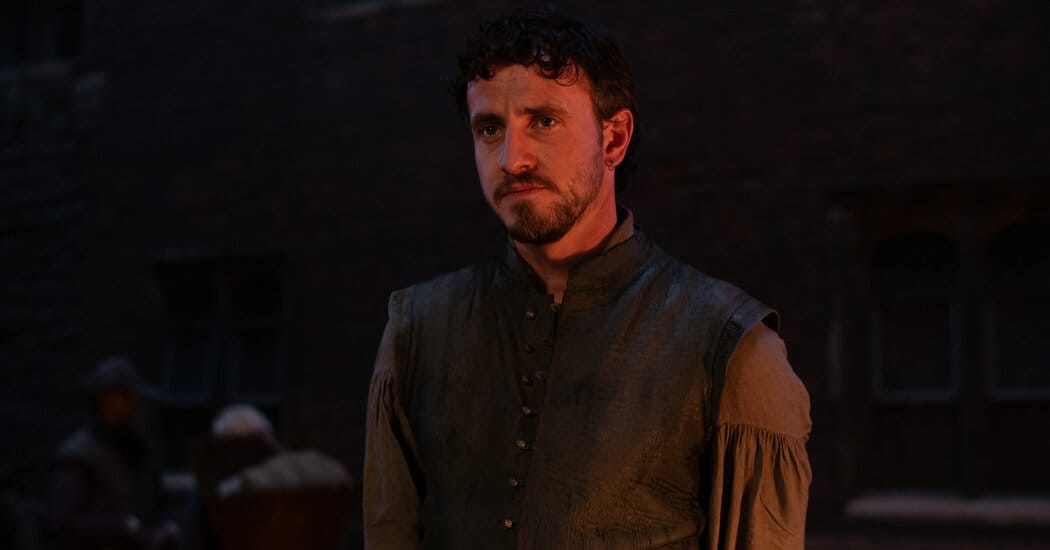
Chloé Zhao’s drama Hamnet includes Shakespeare’s famous “To be, or not to be” soliloquy twice: first delivered by Paul Mescal as Shakespeare in a night scene beside water, and later by Noah Jupe as a young actor on the Globe stage. In the first instance Mescal’s character stands on the edge of a wall, looking at water below and grieving the loss of his 11-year-old son, and speaks the lines slowly as if moving through fog.
Later, Jupe’s Hamlet addresses the crowd with a light, unburdened voice at the play’s first performance, a contrast that highlights how the passage can function as both existential inquiry and guttural lament; the playwright’s wife, Agnes, watches and sees a resemblance to her lost son.
The piece emphasizes the soliloquy’s emotional and linguistic flexibility: the opening phrase is short and elemental, while the lines that follow contain rarer words and complex ideas about death and what comes after. The article also traces how filmmakers and writers have repurposed the speech across culture — from Ernst Lubitsch’s 1942 comedy To Be or Not to Be and Colin Firth’s use of the passage in The King’s Speech, to examples such as Kurt Vonnegut’s “2 B R 0 2 B,” P.D.
James’s The Children of Men, the Royal Shakespeare Company’s 2016 sketch, and recent works including the films Sing Sing and the video-game documentary Grand Theft Hamlet. Whether all the shades of meaning now attached to the speech were in Shakespeare’s mind when he wrote it is left uncertain.
Key Topics
Culture, Hamnet, Chloé Zhao, William Shakespeare, Hamlet, Paul Mescal