
U.S. Science on the Sidelines of an Ambitious Antarctic Quest
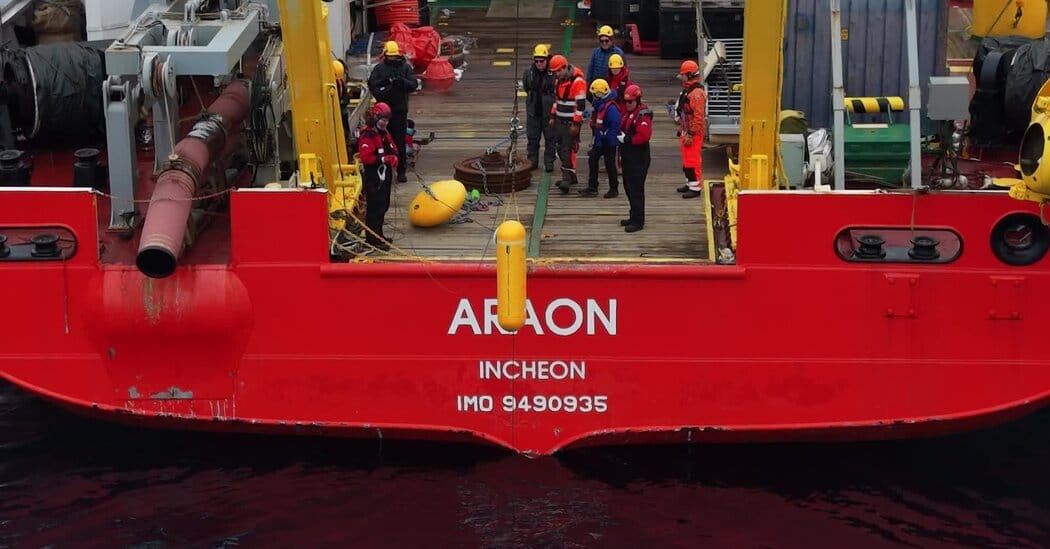
Nearly 40 scientists spent eight weeks aboard the South Korean icebreaker Araon on a major Antarctic expedition that ended on Thursday. Roughly one in four were American, but none of the main research was funded by the U.S. National Science Foundation. Under President Trump, the agency last year decommissioned the only U.S.
icebreaker devoted to studying the frozen continent. "I feel really disappointed," said David Holland, a polar scientist at New York University who joined the trip. The voyage concentrated on the Thwaites Glacier, an unstable mass of ice the size of Florida that helps hold back the West Antarctic ice sheet.
Scientists worry its collapse could eventually add about 15 feet to global sea-level rise, yet researchers still lack the detailed measurements needed to forecast how much water will reach coasts and when. Last year the National Science Foundation funded fewer grants across science, with awards for geosciences down about a quarter in 2025 compared with the decade average.
South Korea, West Antarctica
thwaites glacier, west antarctic, sea-level, icebreaker araon, nsf, us icebreaker, antarctic expedition, david holland, geosciences funding, south korea