
Winter storms bury Russia’s Kamchatka Peninsula under meters of snow
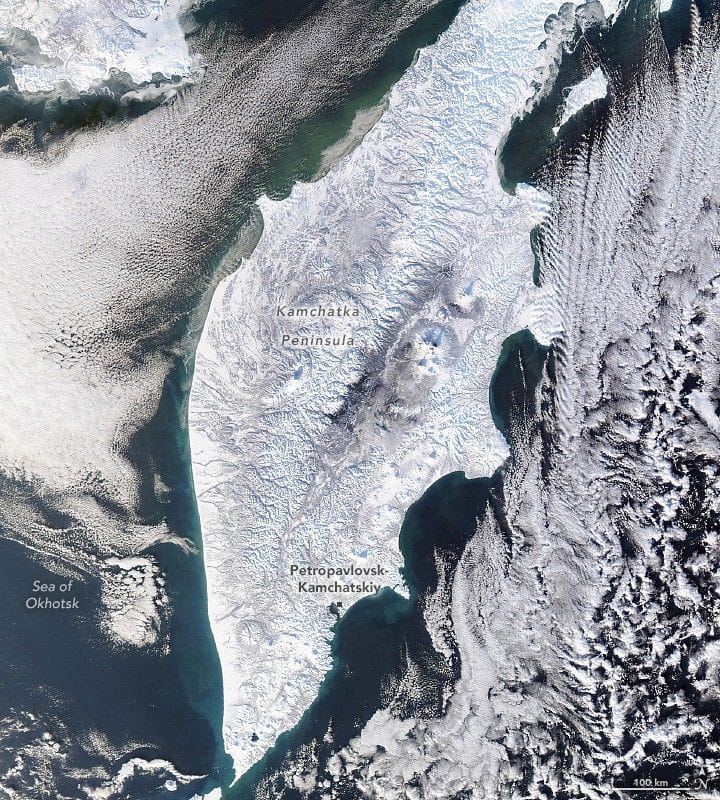
Intense winter storms in December and January have dumped heavy snow across Russia’s Kamchatka Peninsula, leaving the regional capital Petropavlovsk-Kamchatsky at a standstill, according to a NASA Earth Observatory report.
News reports cited in the NASA article say more than 2 meters of snow fell in the first two weeks of January, following 3.7 meters in December. Kamchatka’s Hydrometeorology Center described the totals as among the snowiest periods on the peninsula since the 1970s. Reports noted large snowdrifts burying cars and blocking access to buildings and infrastructure. A MODIS image from NASA’s Aqua satellite dated January 17, 2026, shows fresh snow blanketing the peninsula’s rugged terrain and several snow-covered volcanic peaks; Petropavlovsk-Kamchatsky, home to more than 160,000 people, sits along Avacha Bay.
The NASA article places the storms in a broader atmospheric context, saying an unusually early sudden stratospheric warming in late November appears to have helped weaken and distort the polar vortex at times in December, likely increasing waviness in the polar jet stream and priming the atmosphere for disruptive winter storms in January. The article presents this linkage as an apparent or likely factor rather than a definitive cause.
Key Topics
Science, Kamchatka Peninsula, Petropavlovsk-kamchatsky, Avacha Bay, Kamchatka Hydrometeorology Center, Modis