
How Ancient Perfume Was Made: Egypt, Cyprus & Roman Patchouli
How Ancient Perfume Was Made: Egypt, Cyprus & Roman Patchouli
How did ancient people capture a scent they could smell but never hold?
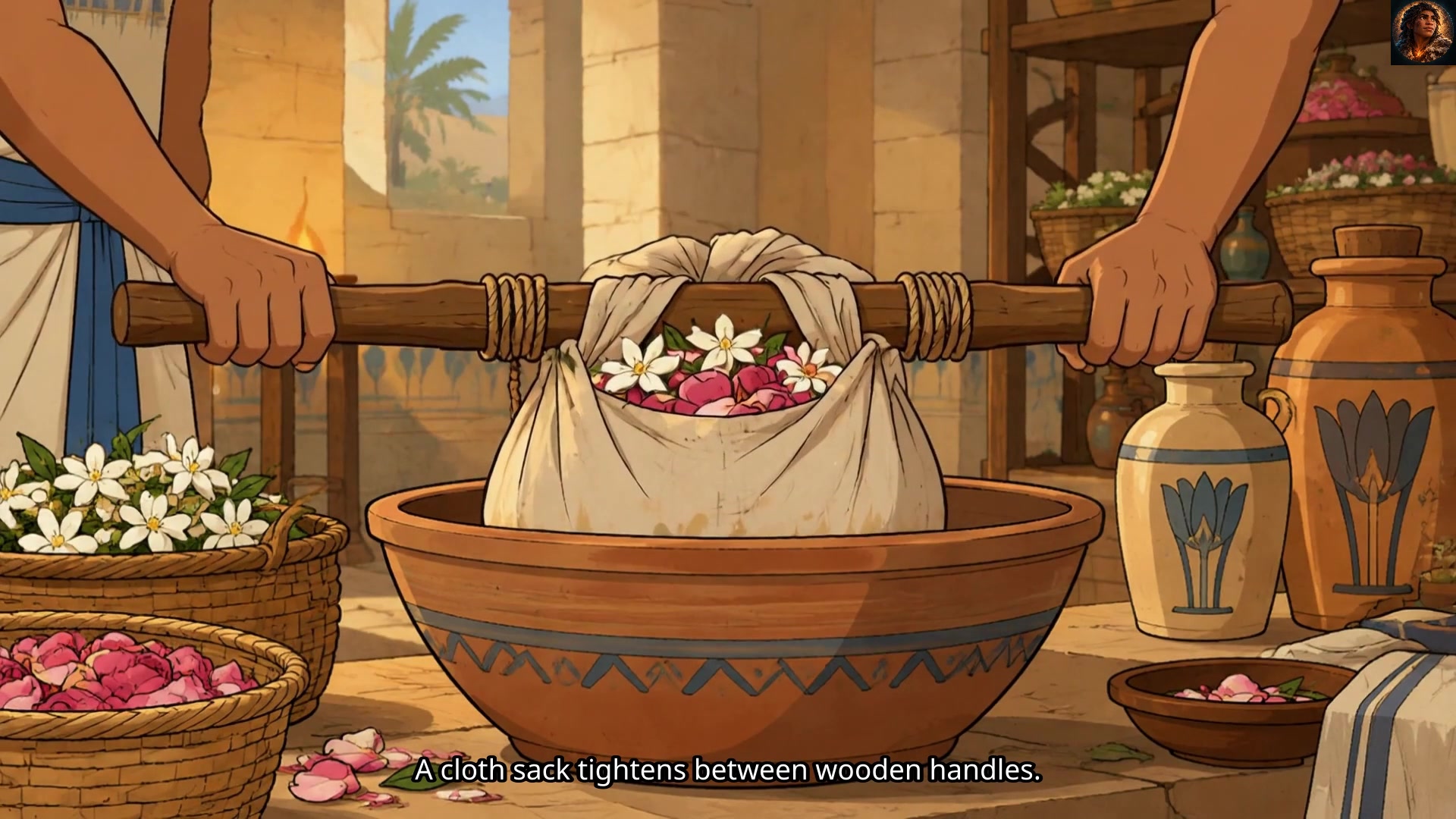
This episode explores the origins and technology of ancient perfume—from Egyptian flower presses and Bronze Age production on Cyprus to a 2,000-year-old Roman perfume discovered in Carmona, Spain.
We examine how oils absorbed fragrance from flowers, how ancient workshops organized production, why containers mattered, and how chemical analysis identified possible patchouli in a sealed Roman vessel.
The evidence cannot reveal the exact smell of every ancient perfume, but it shows the skill, experimentation, trade, and craftsmanship behind fragrances that could be stored, carried, and worn.
Welcome to Emberkin Origins, exploring the history of everyday inventions through archaeology and material evidence.
Timestamps
00:00 How ancient people captured fragrance
00:22 Reconstructing an ancient perfume technique
00:42 Welcome to Emberkin Origins
00:53 Why perfume was difficult to preserve
01:13 Oil as an ancient fragrance carrier
01:33 Egyptian perfume production
01:58 The labor behind ancient luxury
02:17 The Bronze Age perfumery at Pyrgos
02:42 Why the oldest evidence is not always the first invention
02:59 The challenge of making perfume consistently
03:23 Ancient perfume bottles and containers
03:49 A Roman perfume discovered in Spain
04:07 Chemical evidence of patchouli
04:31 What the sealed vessel reveals
04:36 Why we cannot recreate the exact ancient scent
04:42 Fragrance carried through time
05:03 Like, subscribe, and share
Like, Subscribe & Share
#EmberkinOrigins #humanevolution #humanorigins #ancienthumans #earlyhumans #prehistorichumans #prehistory #prehistoriclife #prehistoricsurvival #IceAge #IceAgesurvival #StoneAge #huntergatherers #Neanderthals #Denisovans #Homosapiens #humanancestors #ancienthistory #archaeology #anthropology #ancientinventions #historyexplained #animatedhistory #3Danimation #3Danimateddocumentaries #educationalanimation
Sign in to join the conversation.
 Sign in with Google
Comments