
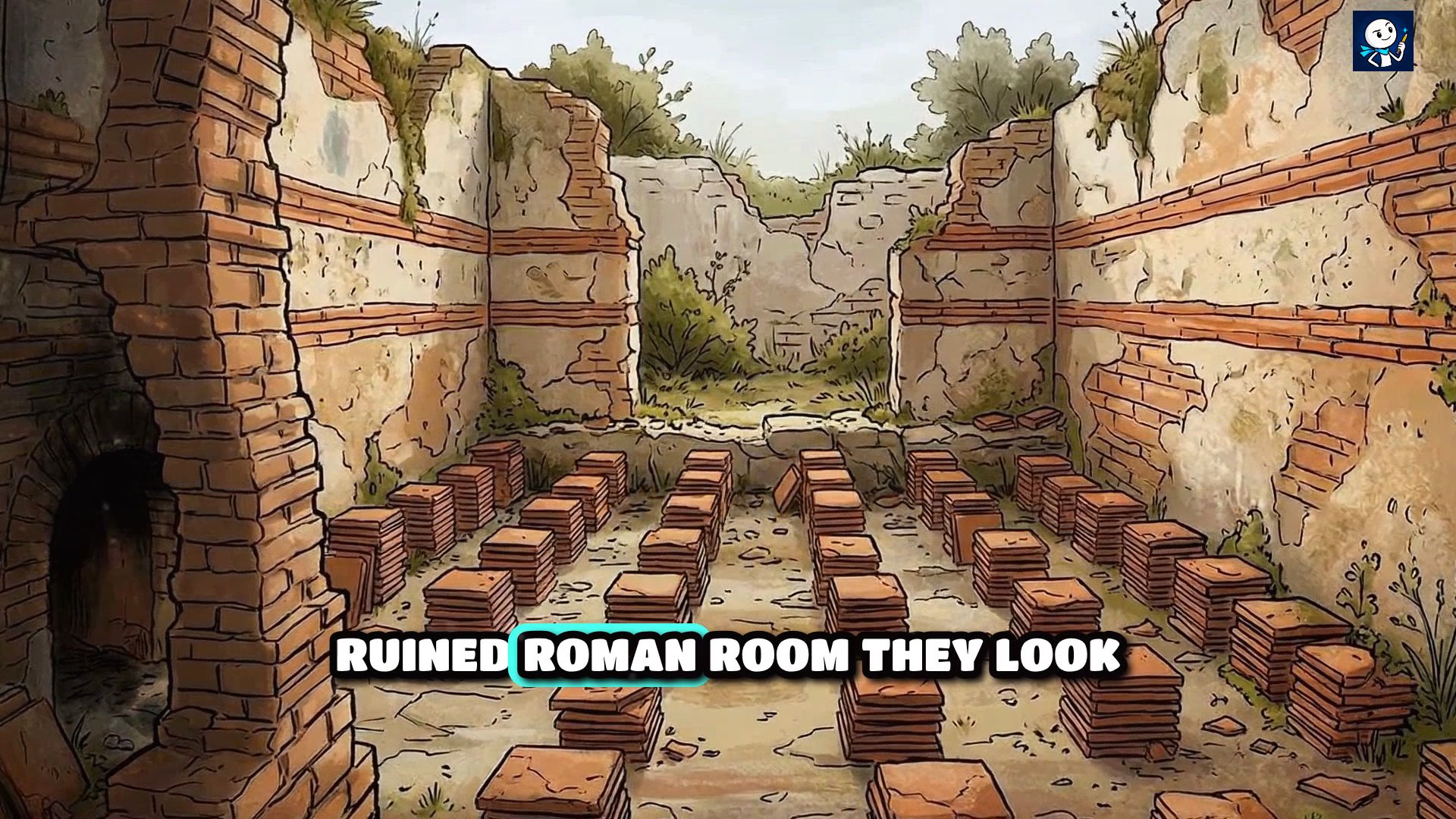
How Did Romans Heat Their Floors? The Hidden Hypocaust
How Did Romans Heat Their Floors? The Hidden Hypocaust
Why do ruined Roman rooms contain rows of small tile stacks? This Scribvanta documentary follows heat from a furnace into the space beneath a suspended floor, then through wall flues toward the outside.
Bath, Chedworth Roman Villa and Wroxeter reveal different parts of the story. We separate the movement of hot gases from water supply, compare surviving structures with ancient architectural writing, and examine the work behind comfortable rooms.
Illustrated in @Scribvanta. Complete interiors, people and heat-flow diagrams are reconstructions. Layouts varied; the episode does not identify a first inventor, prescribe universal temperatures or treat every restored feature as untouched Roman fabric. Research references are listed separately below.
Chapters
00:00 The missing floor
00:38 Bath and the hypocaust
01:14 Supports and suspended floors
02:30 Where the fire worked
03:44 Warming floors and walls
05:38 Rooms at different temperatures
06:52 Bath's hot spring
07:30 Vitruvius and the evidence
08:08 Chedworth: floors and flues
09:22 Wroxeter and larger systems
09:58 Fuel, work and comfort
11:12 Reading the ruins
11:50 Closing reflection
Like, Subscribe & Share
#Scribvanta #stickmananimation #stickfigureanimation #animatedexplainers #animateddocumentaries #educationalanimation #historyexplained #ancienthistory #humanevolution #prehistorichumans #survivalstories #scienceexplained #psychologyexplained #humanbehavior #whatifscenarios #hypotheticalscenarios #surprisingfacts #interestingfacts #curiousquestions #storytellinganimation #visualstorytelling #2Danimation #YouTubeShorts #educationalentertainment
Sign in to join the conversation.
 Sign in with Google
Comments